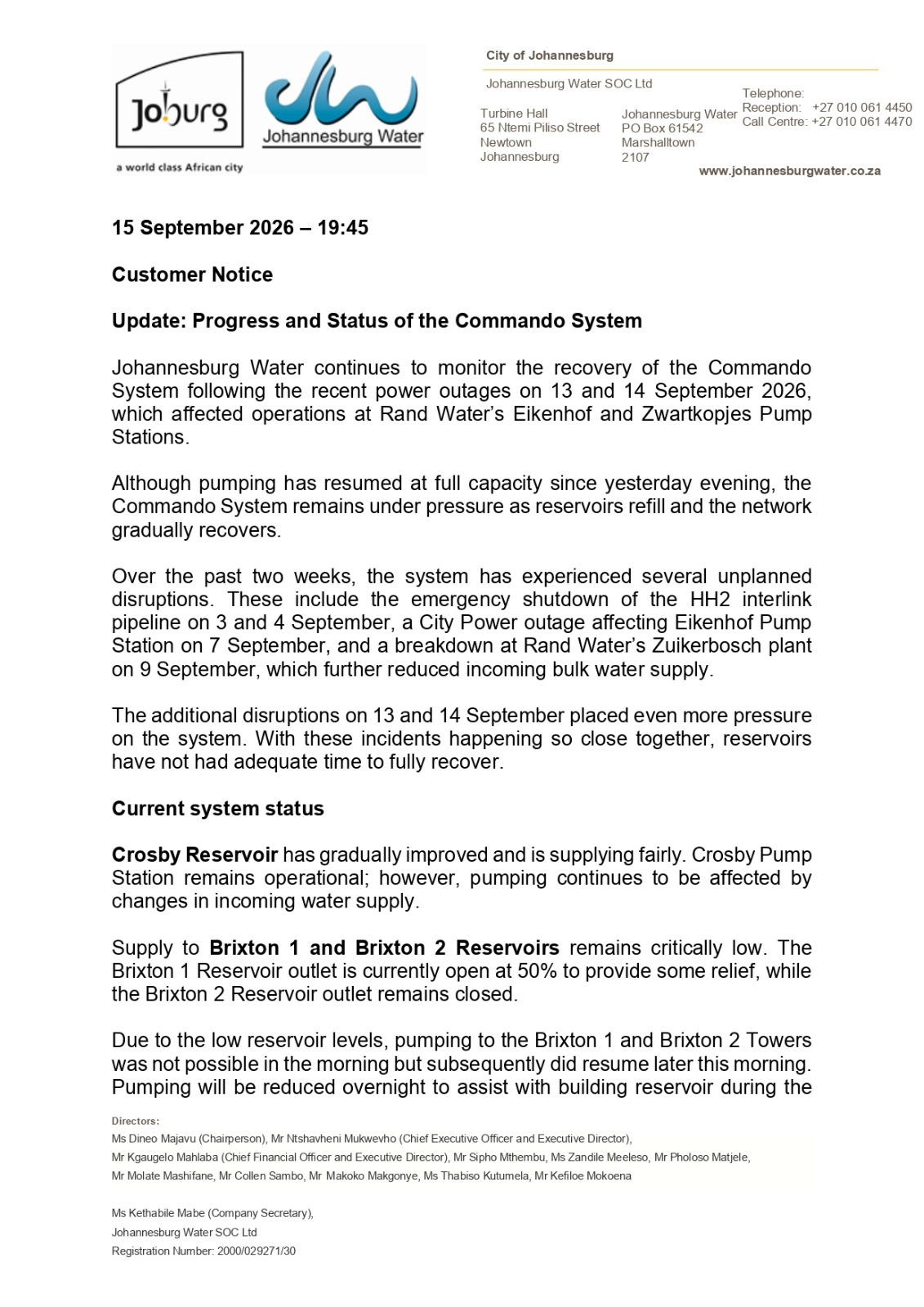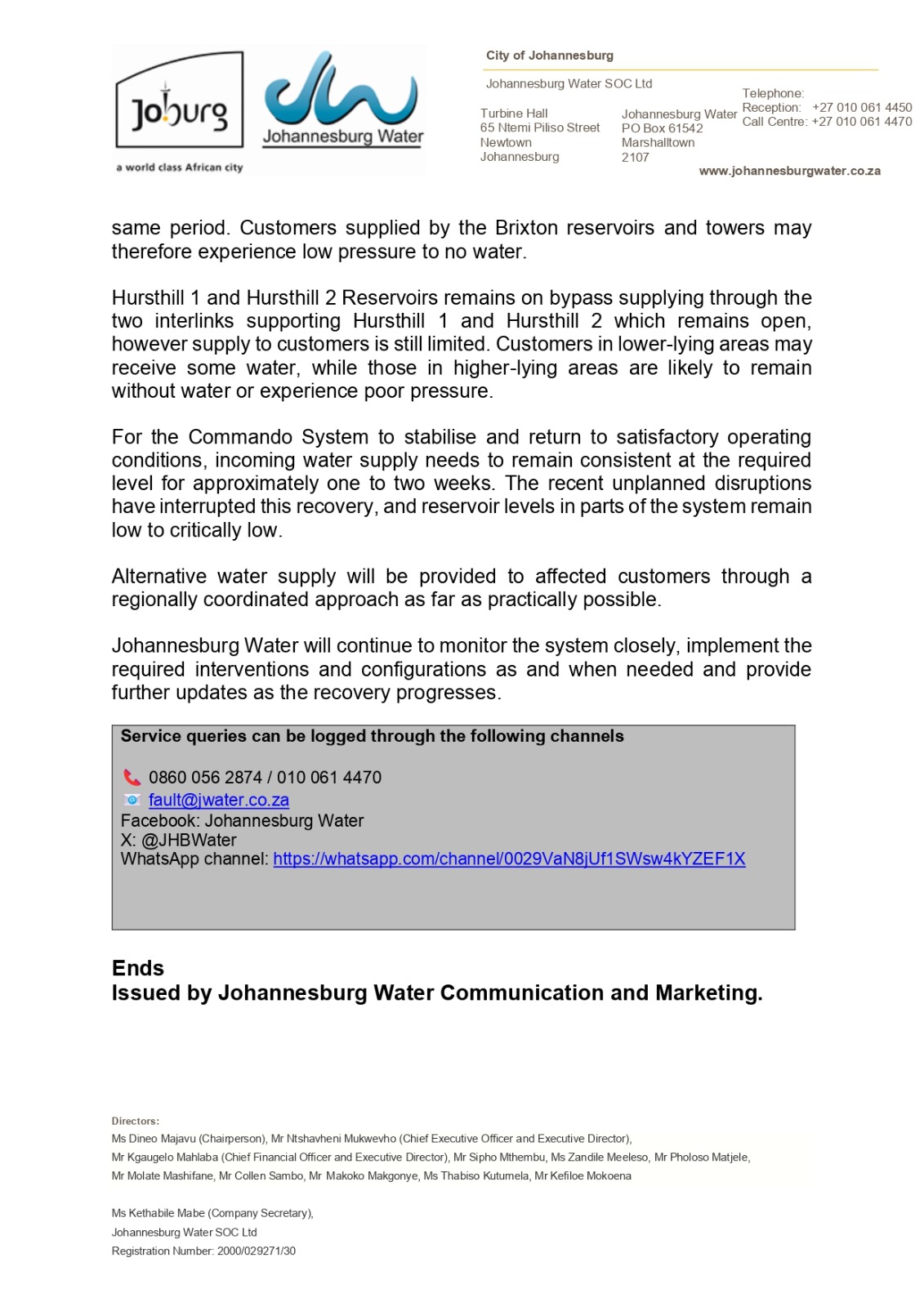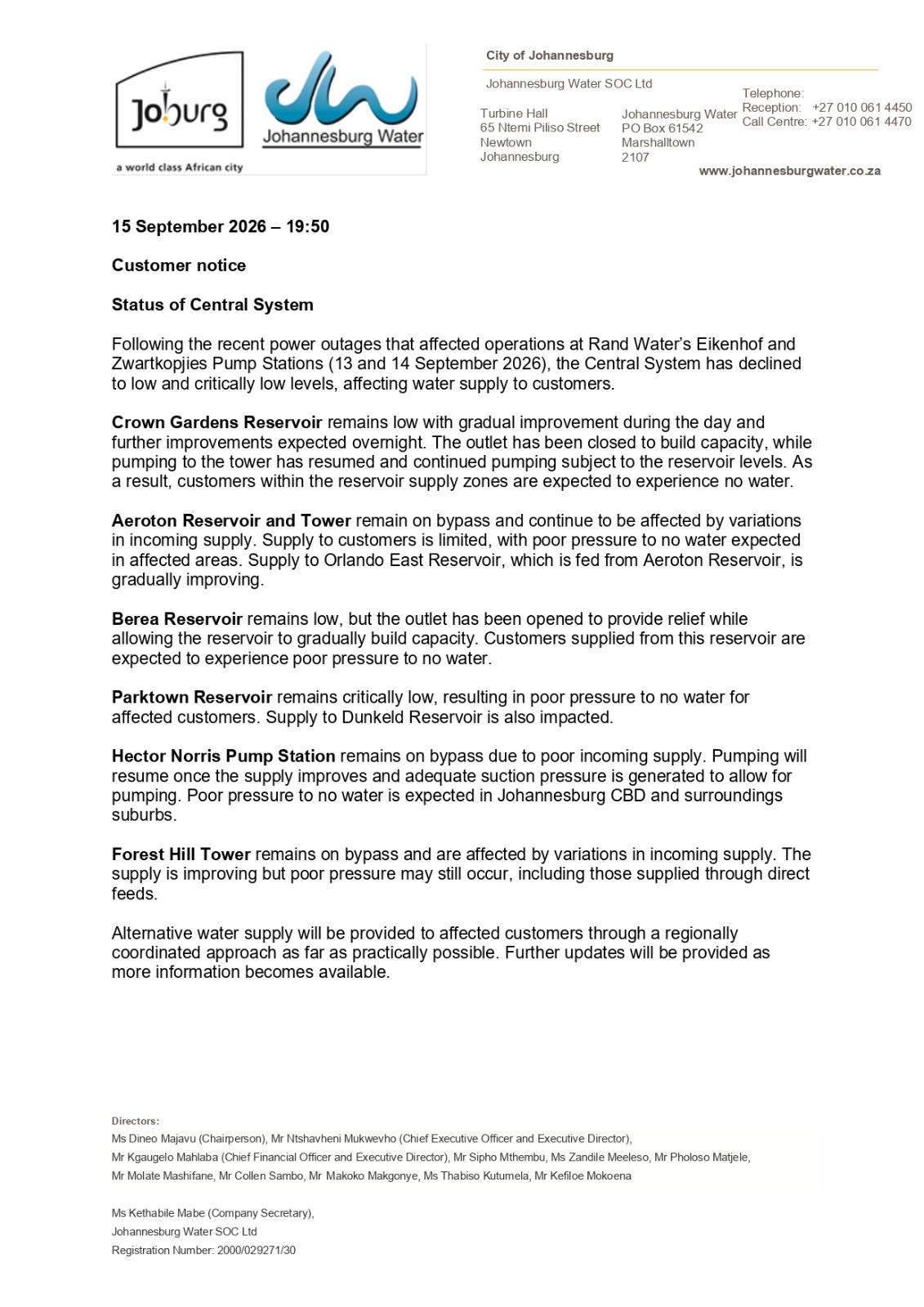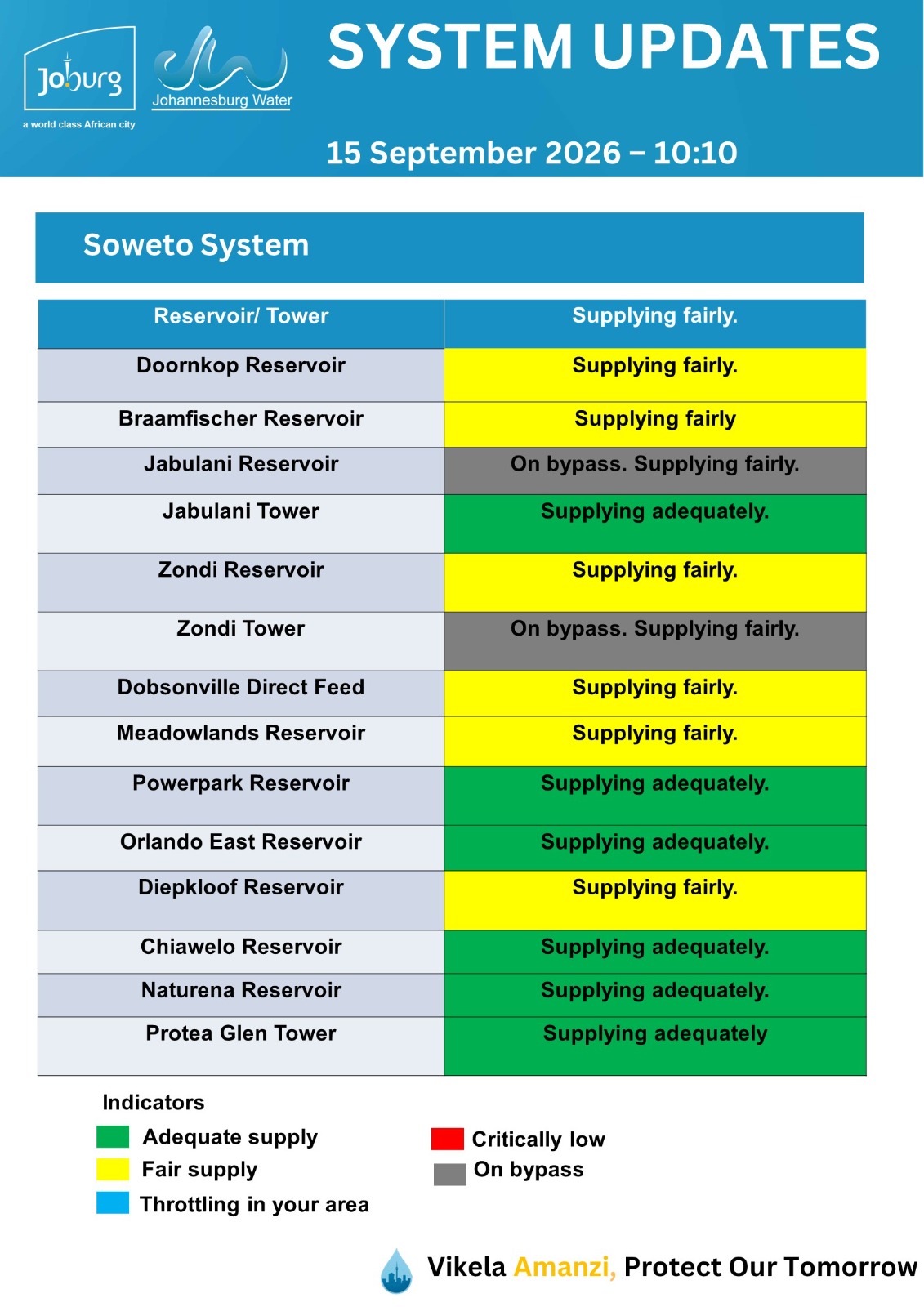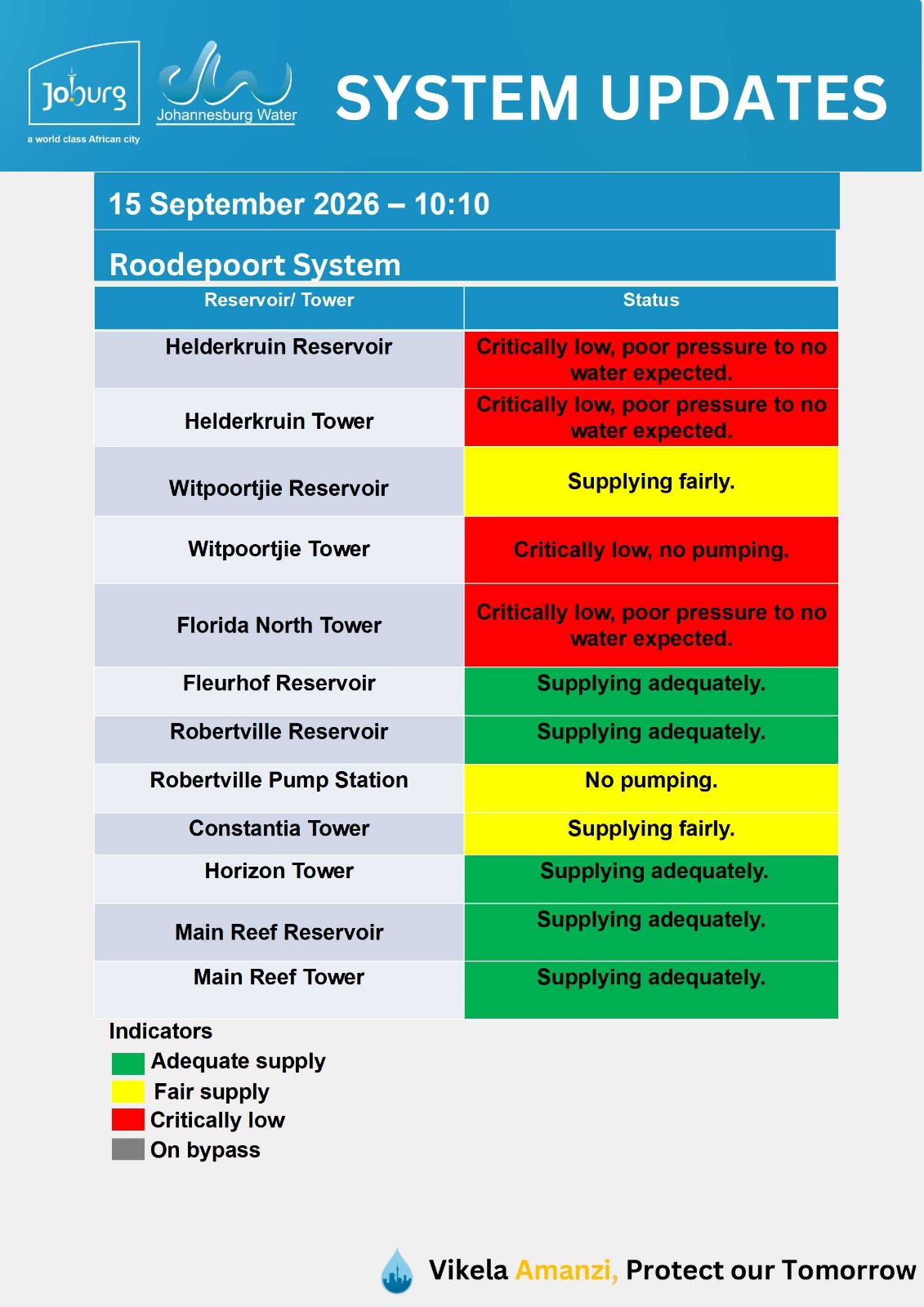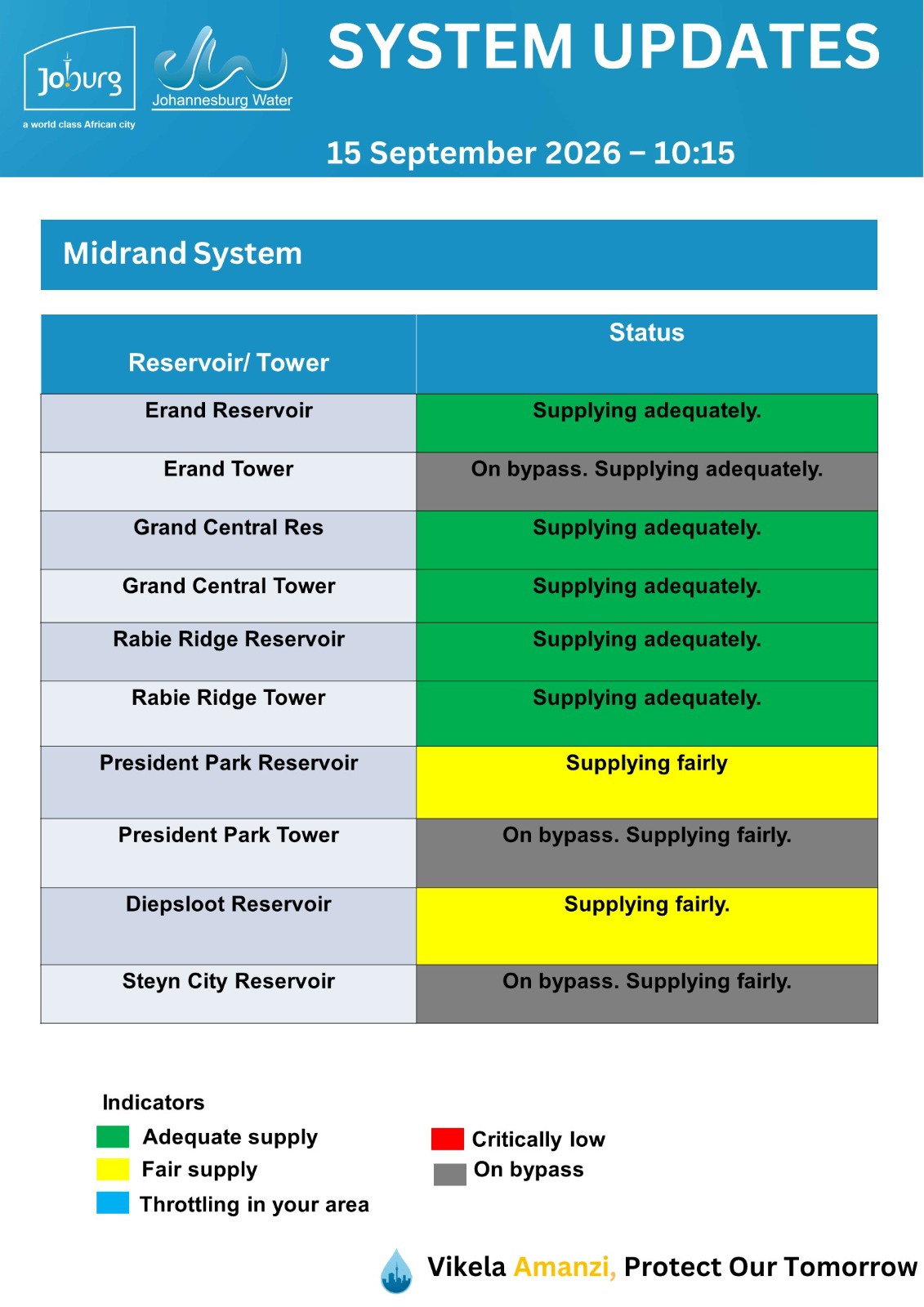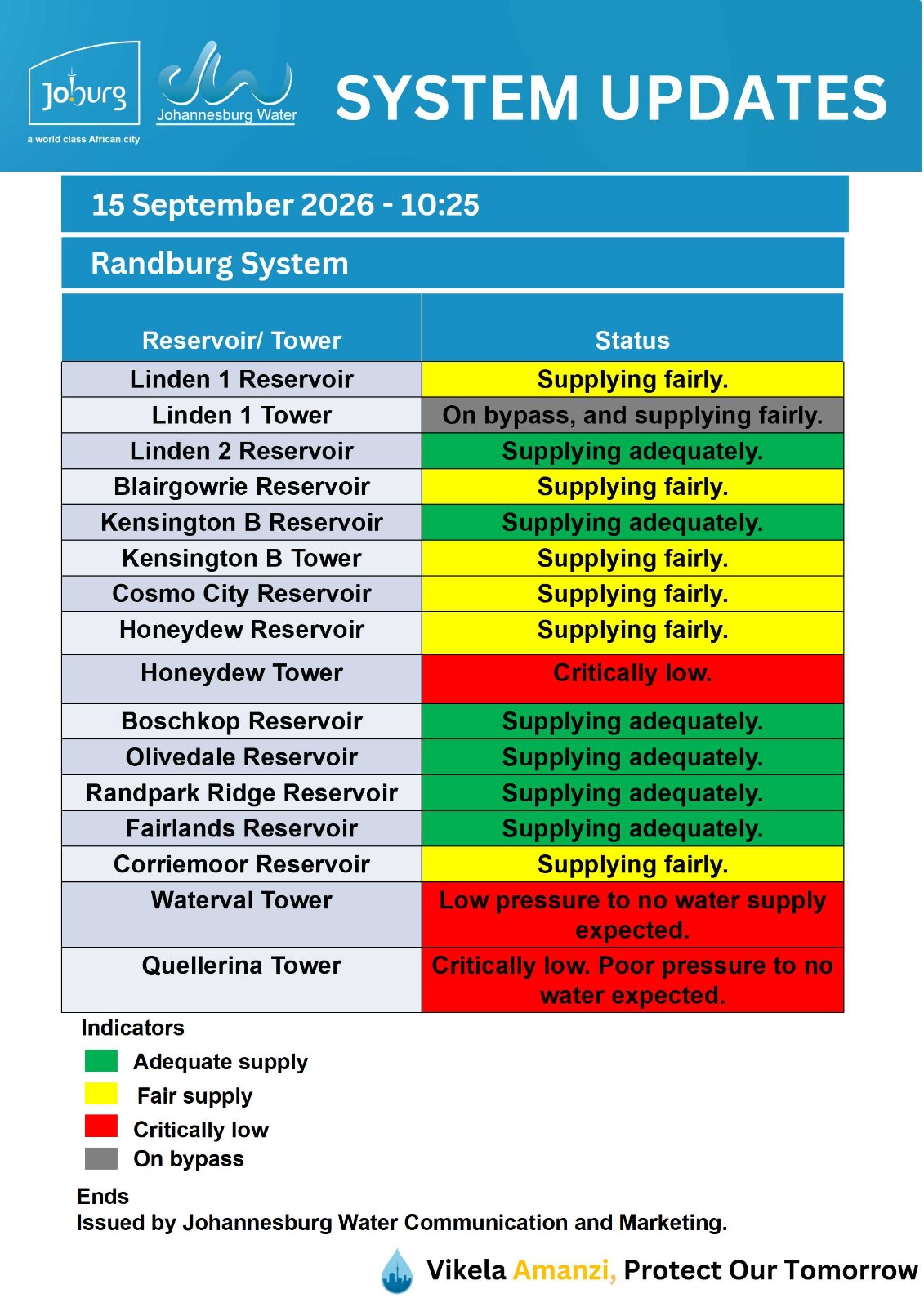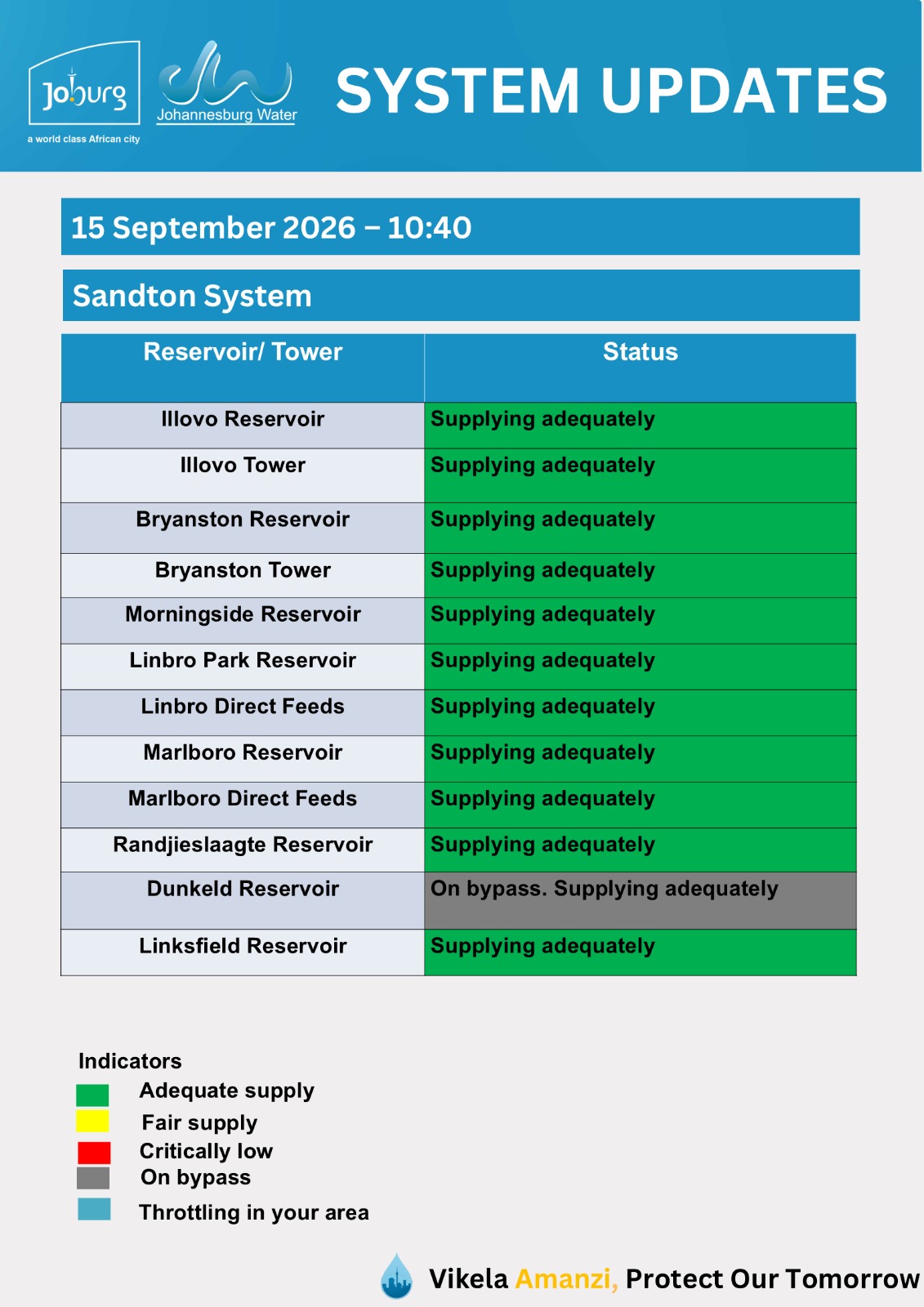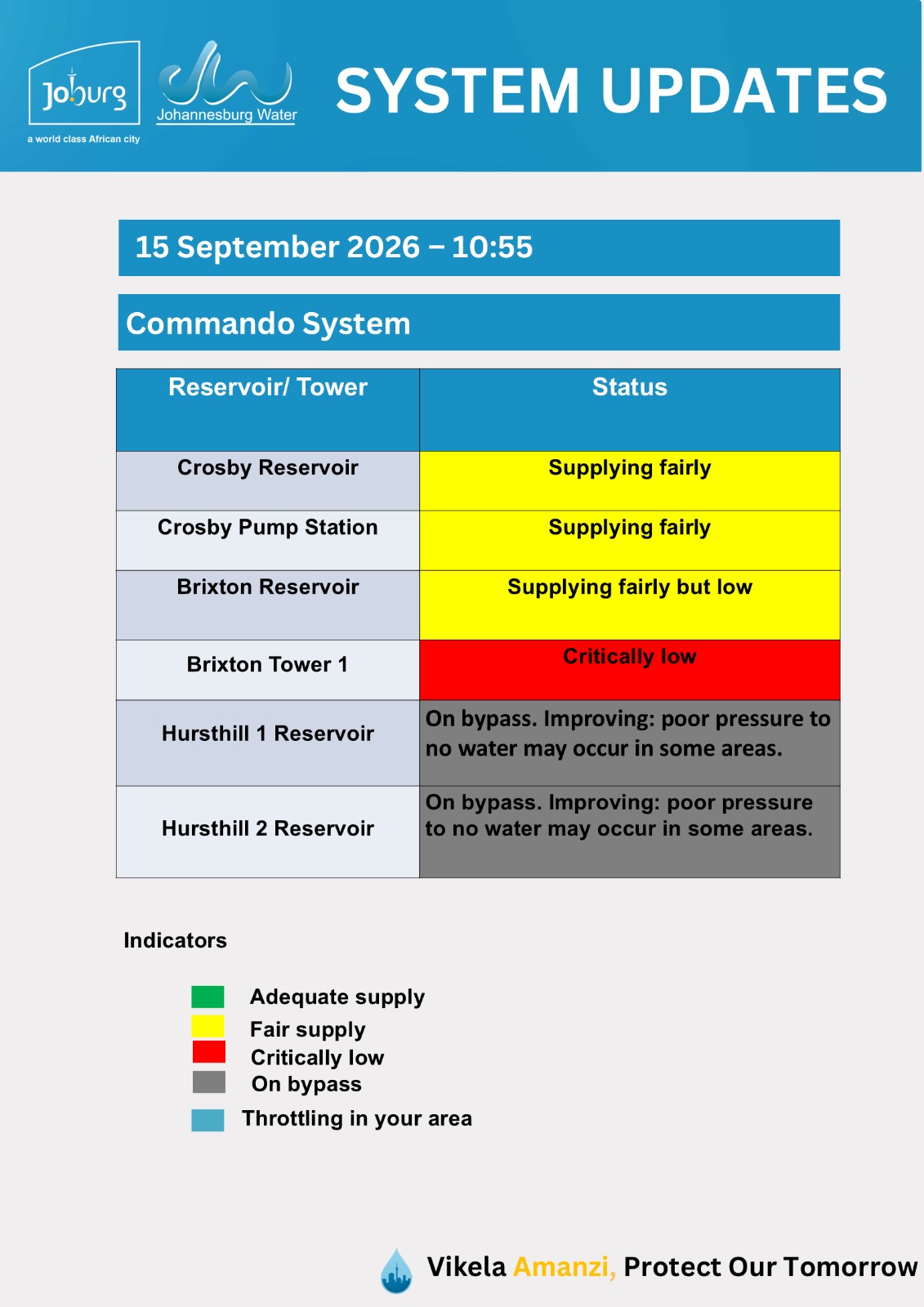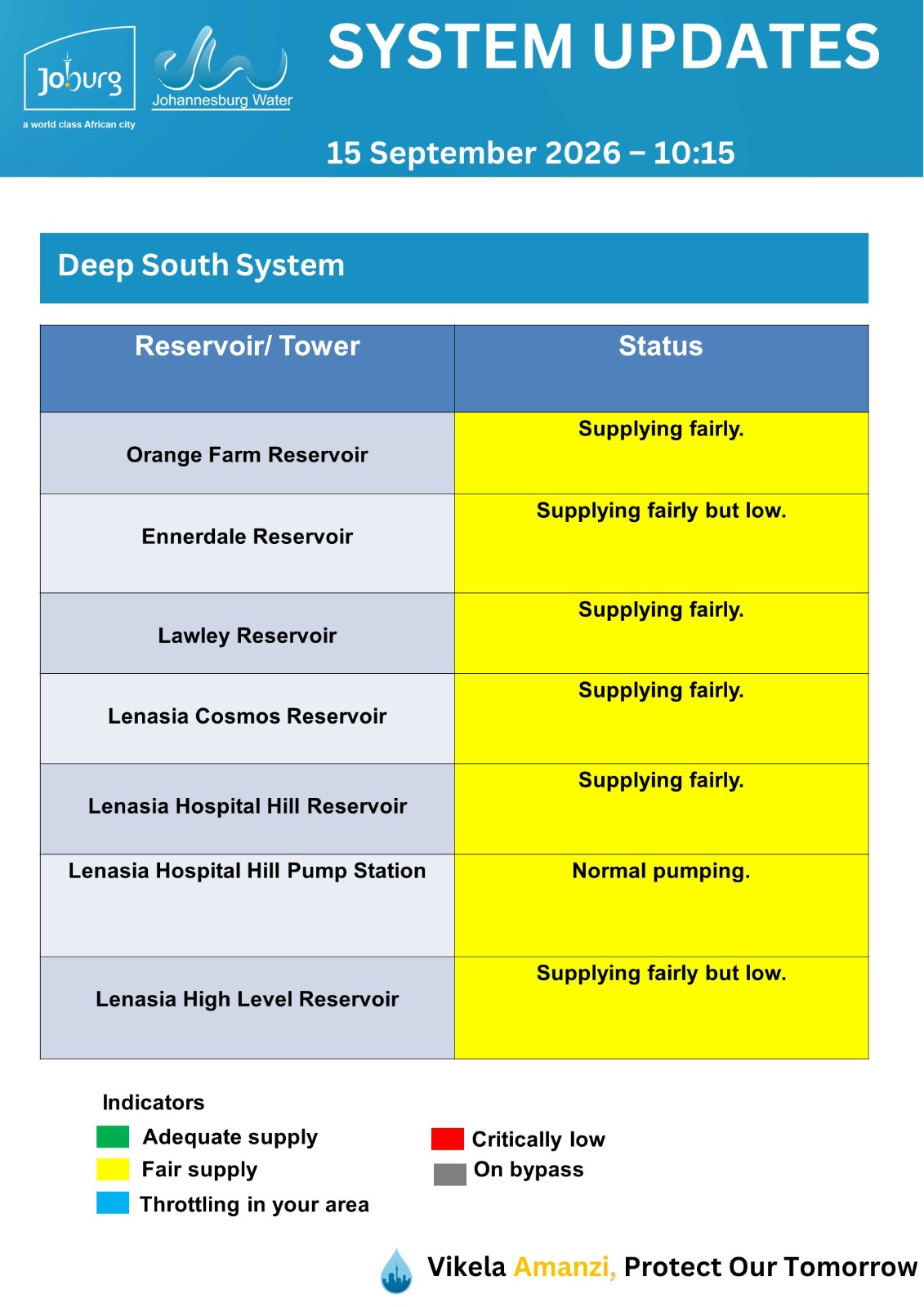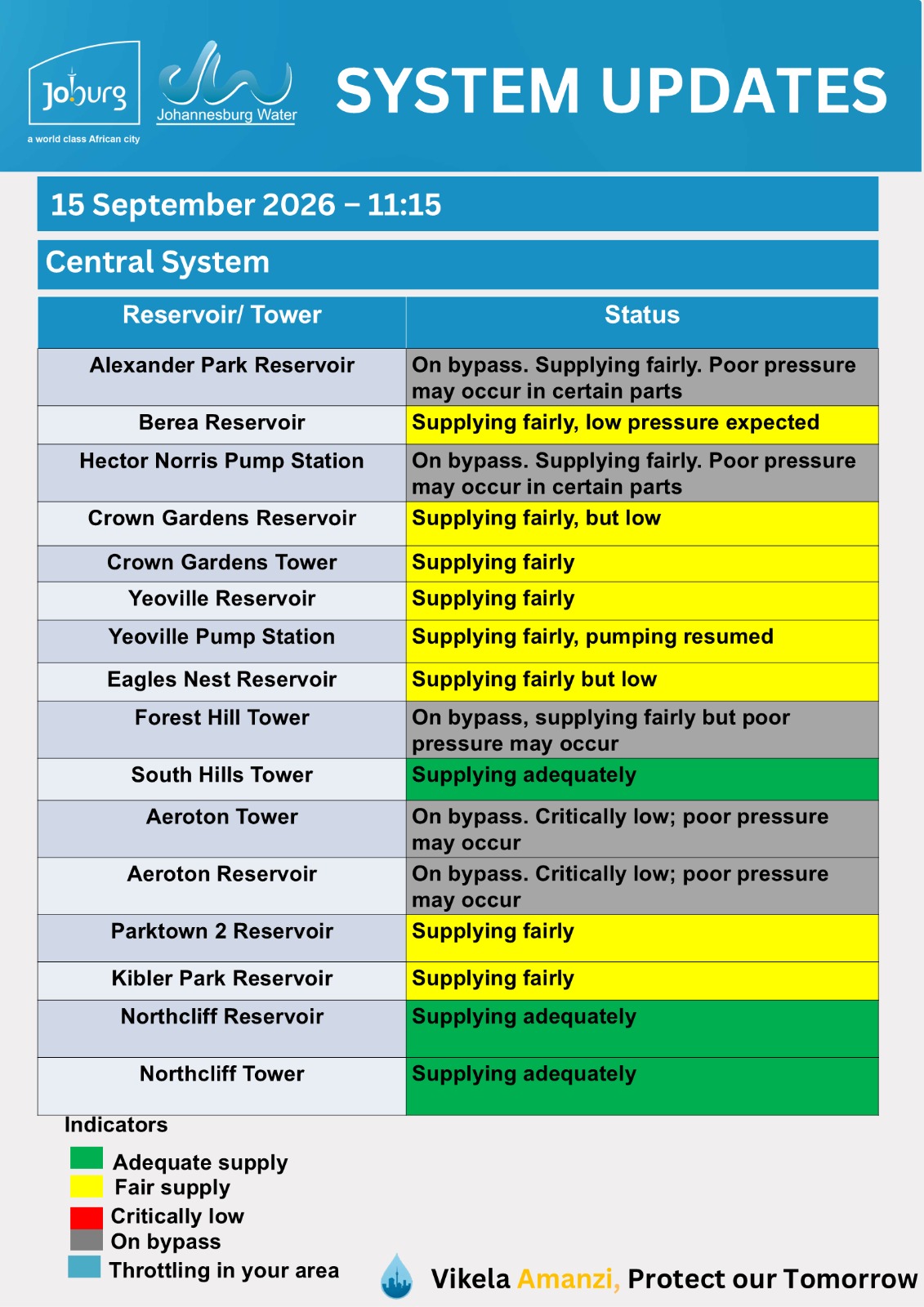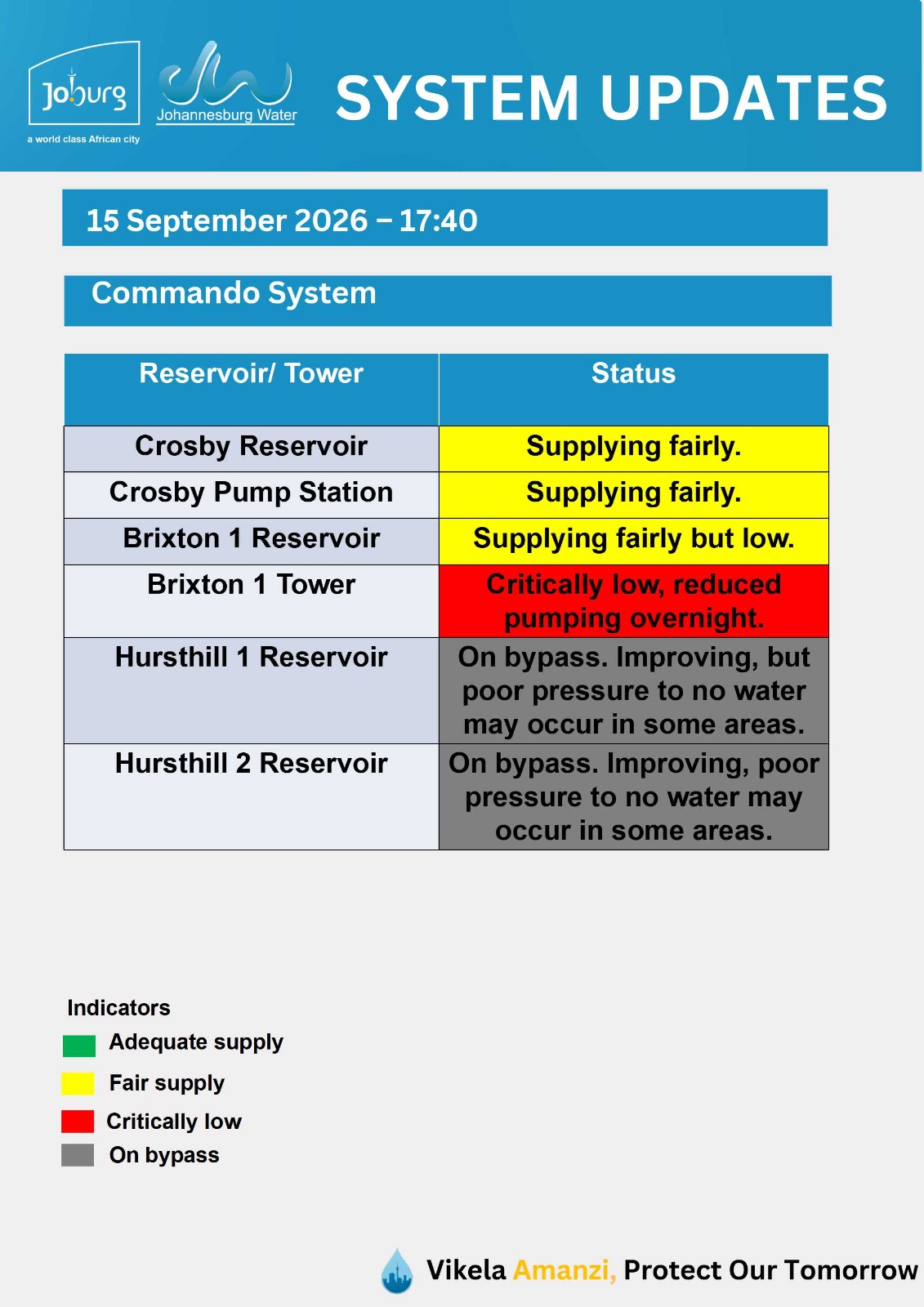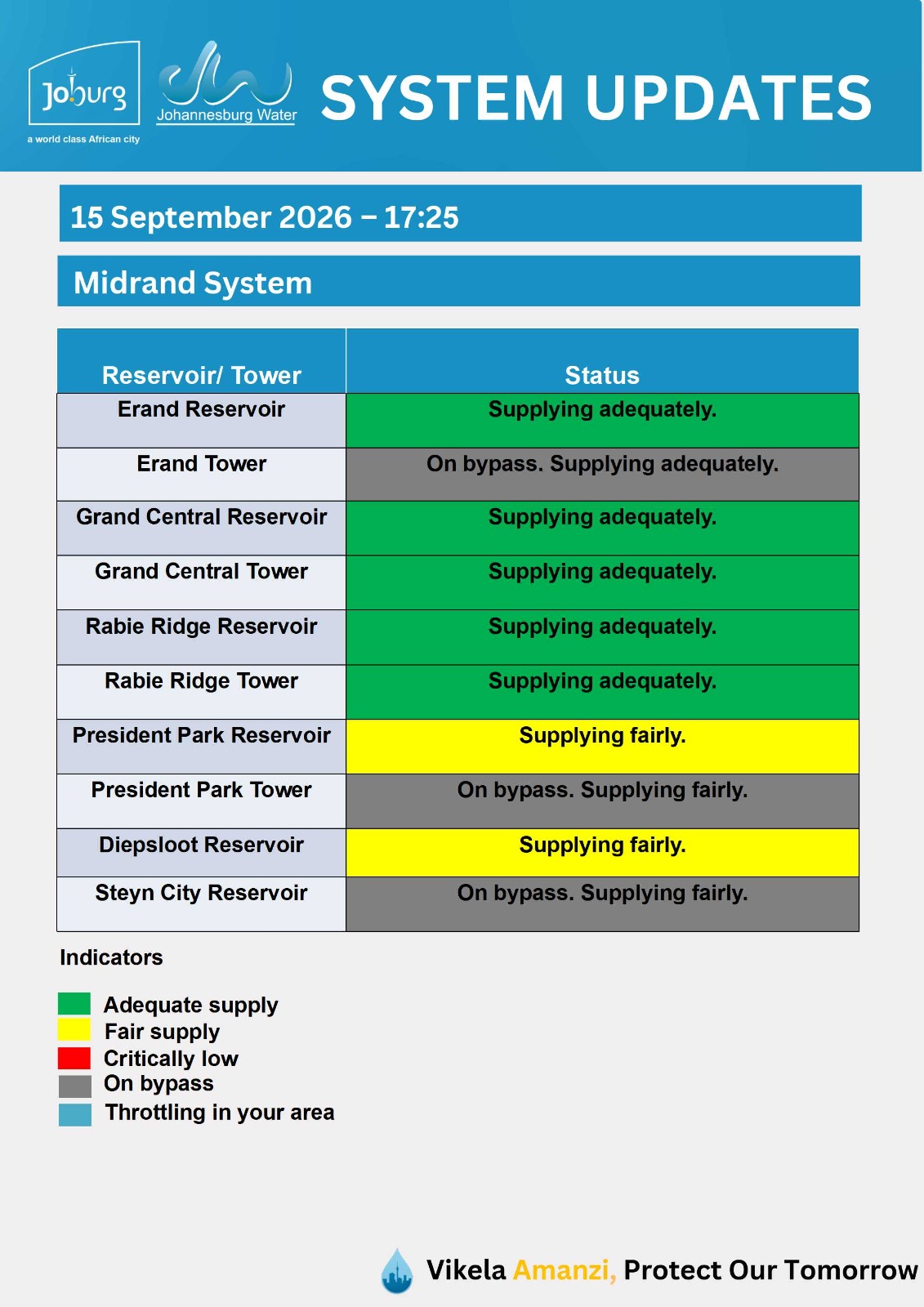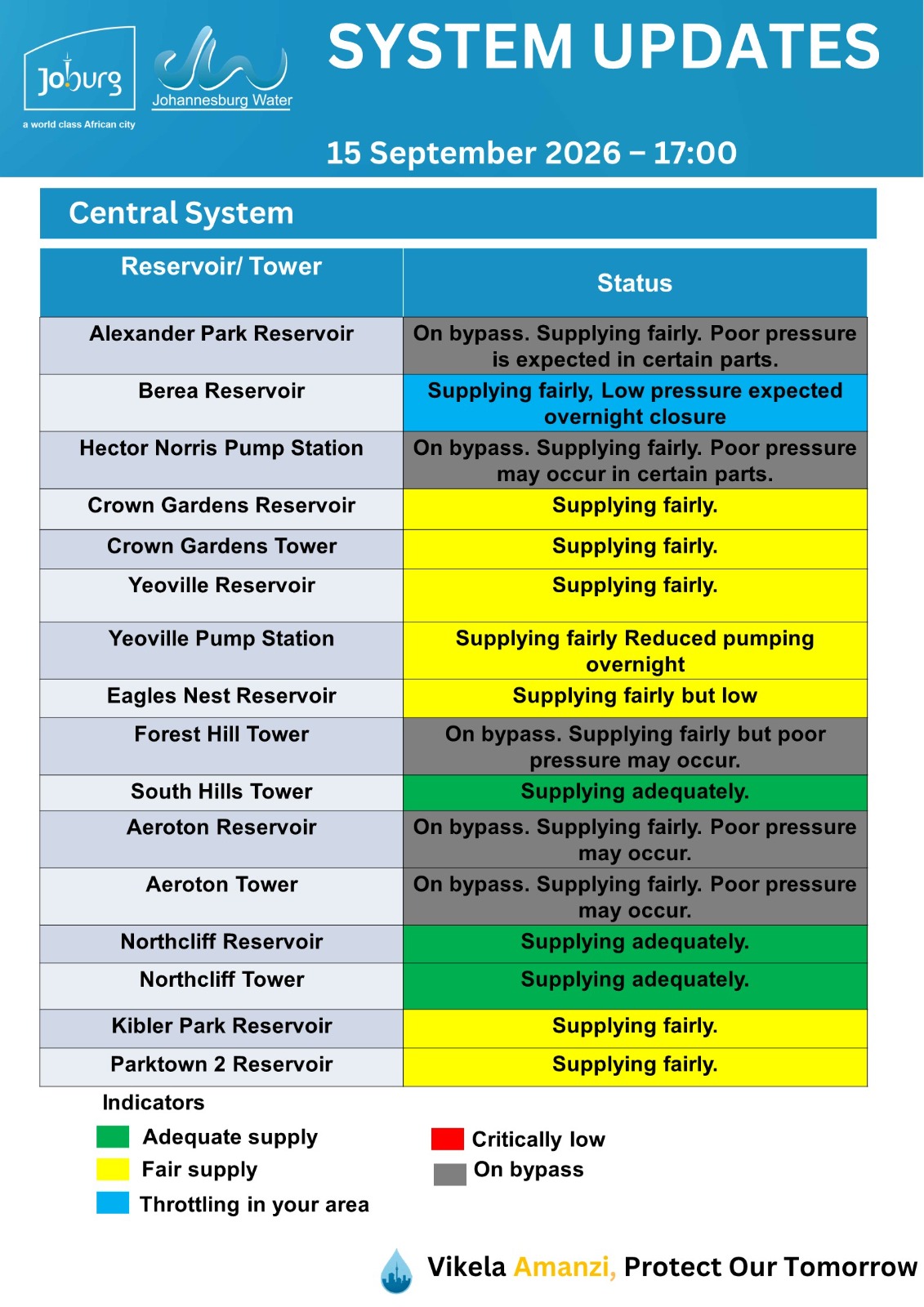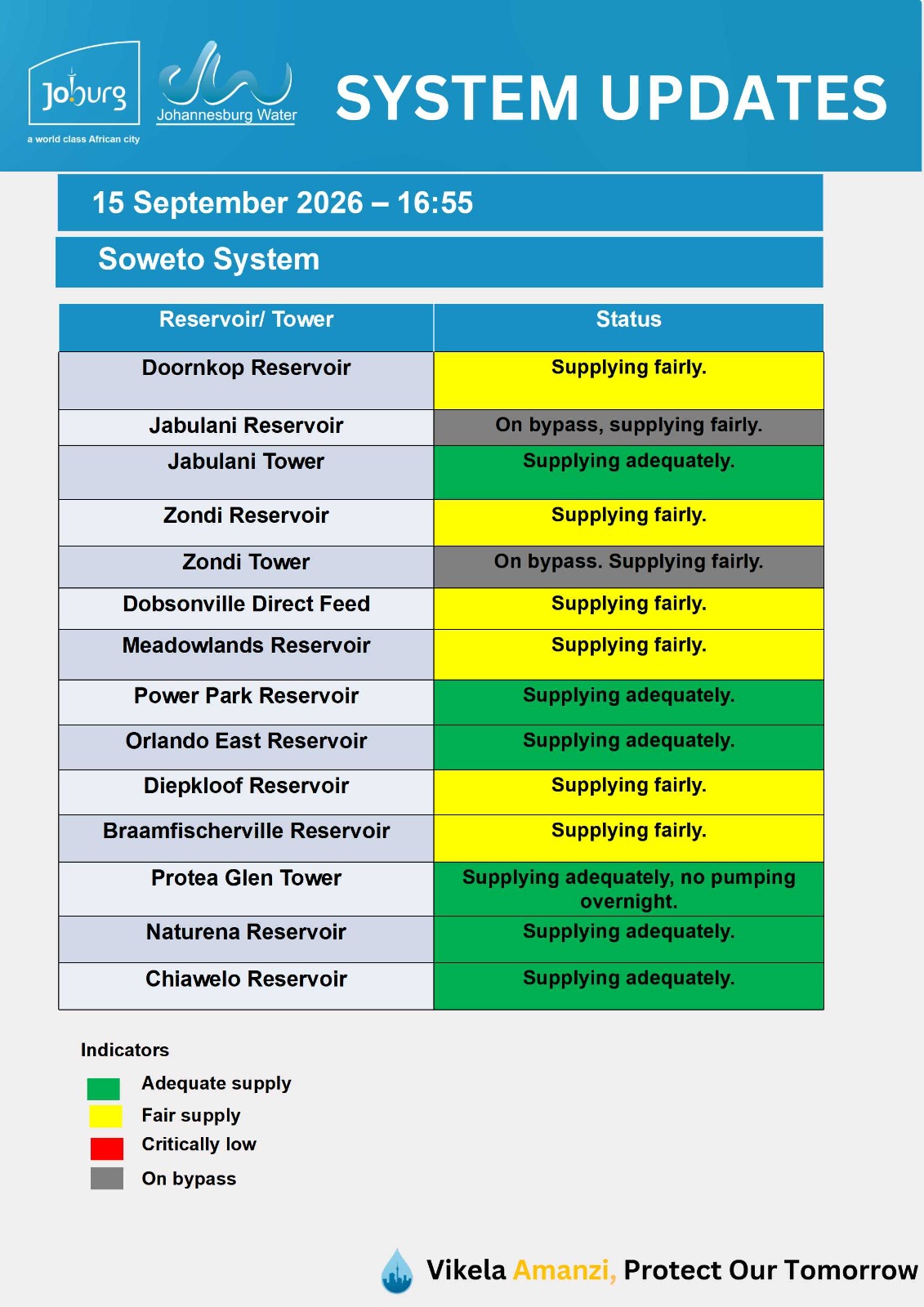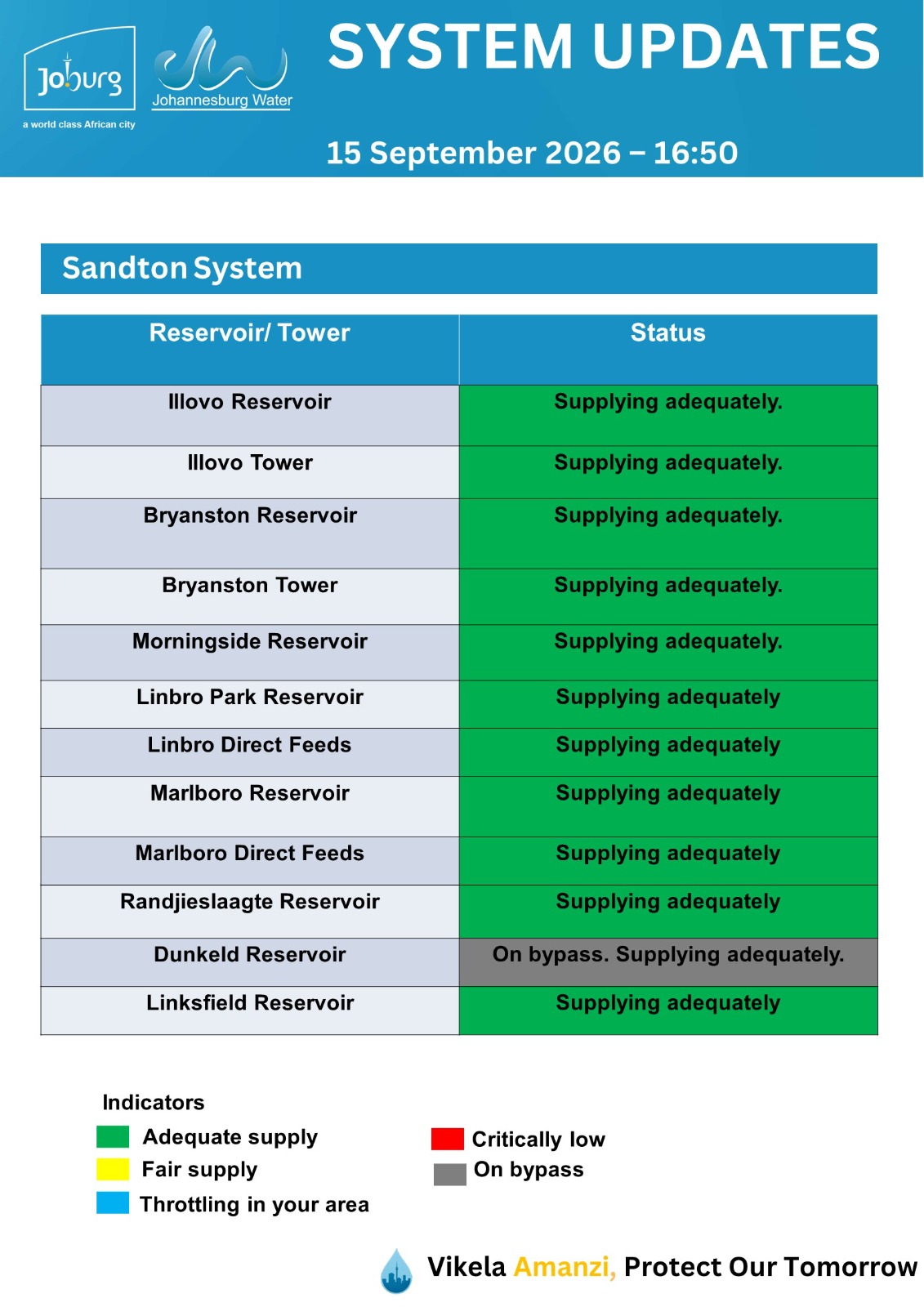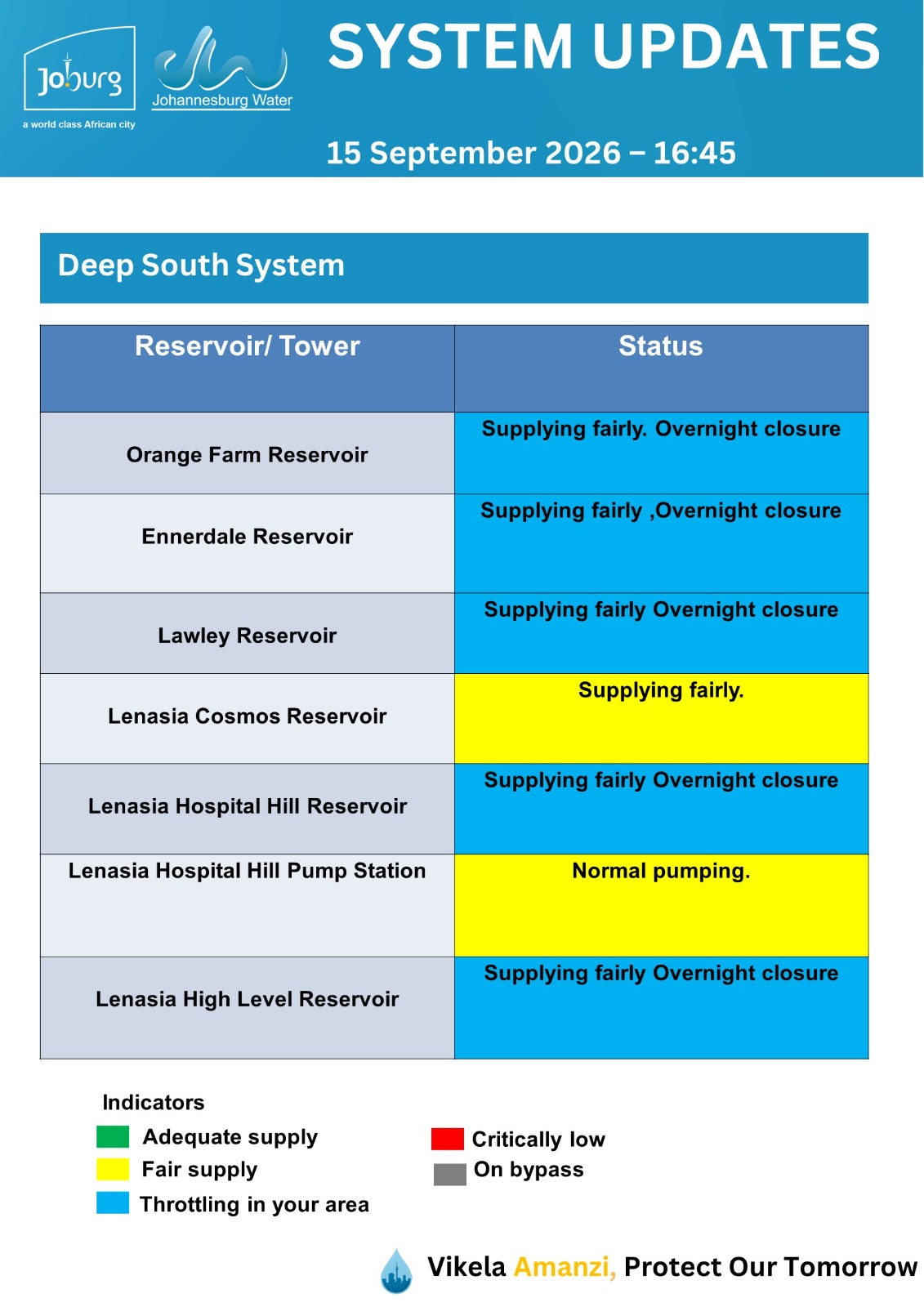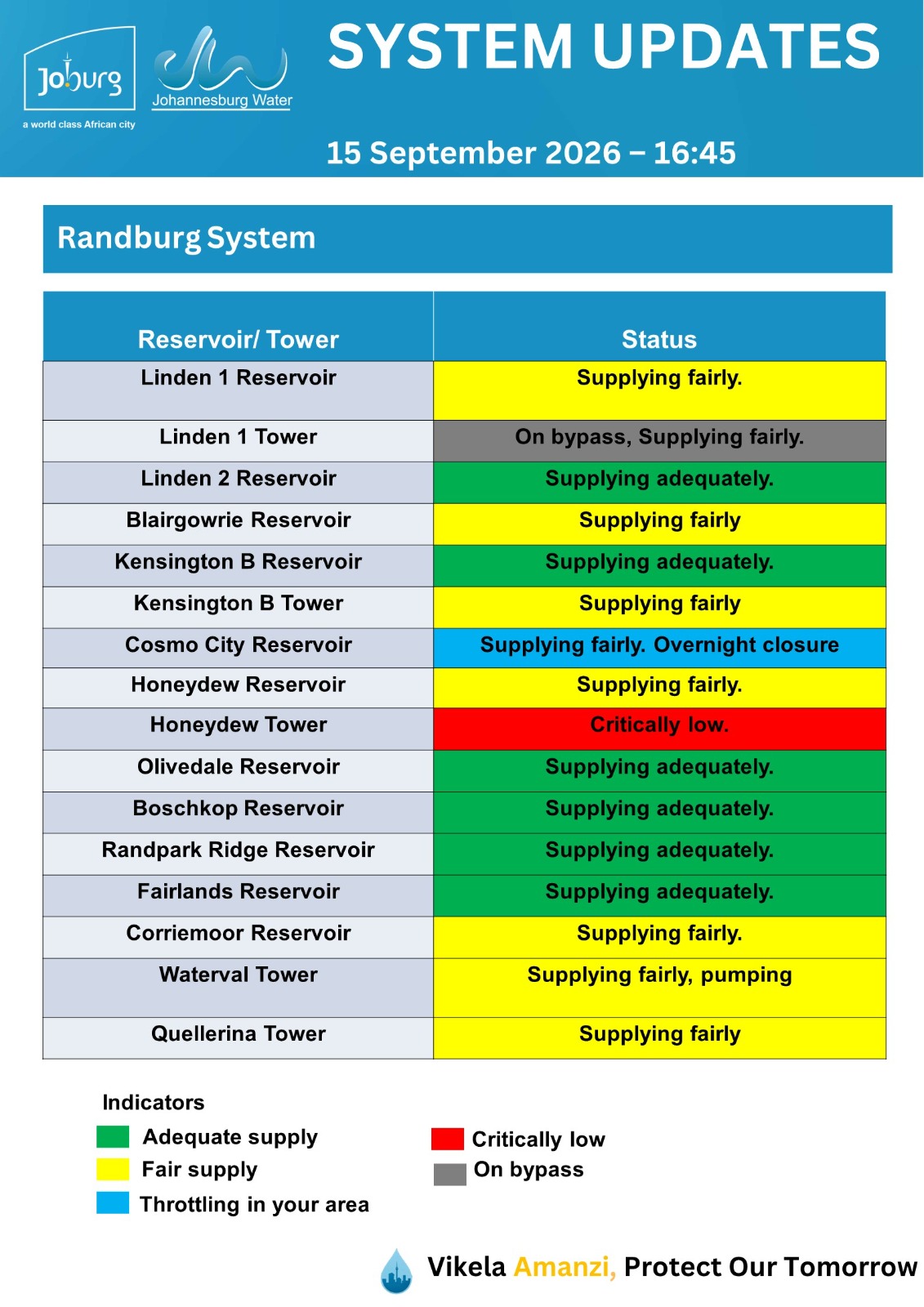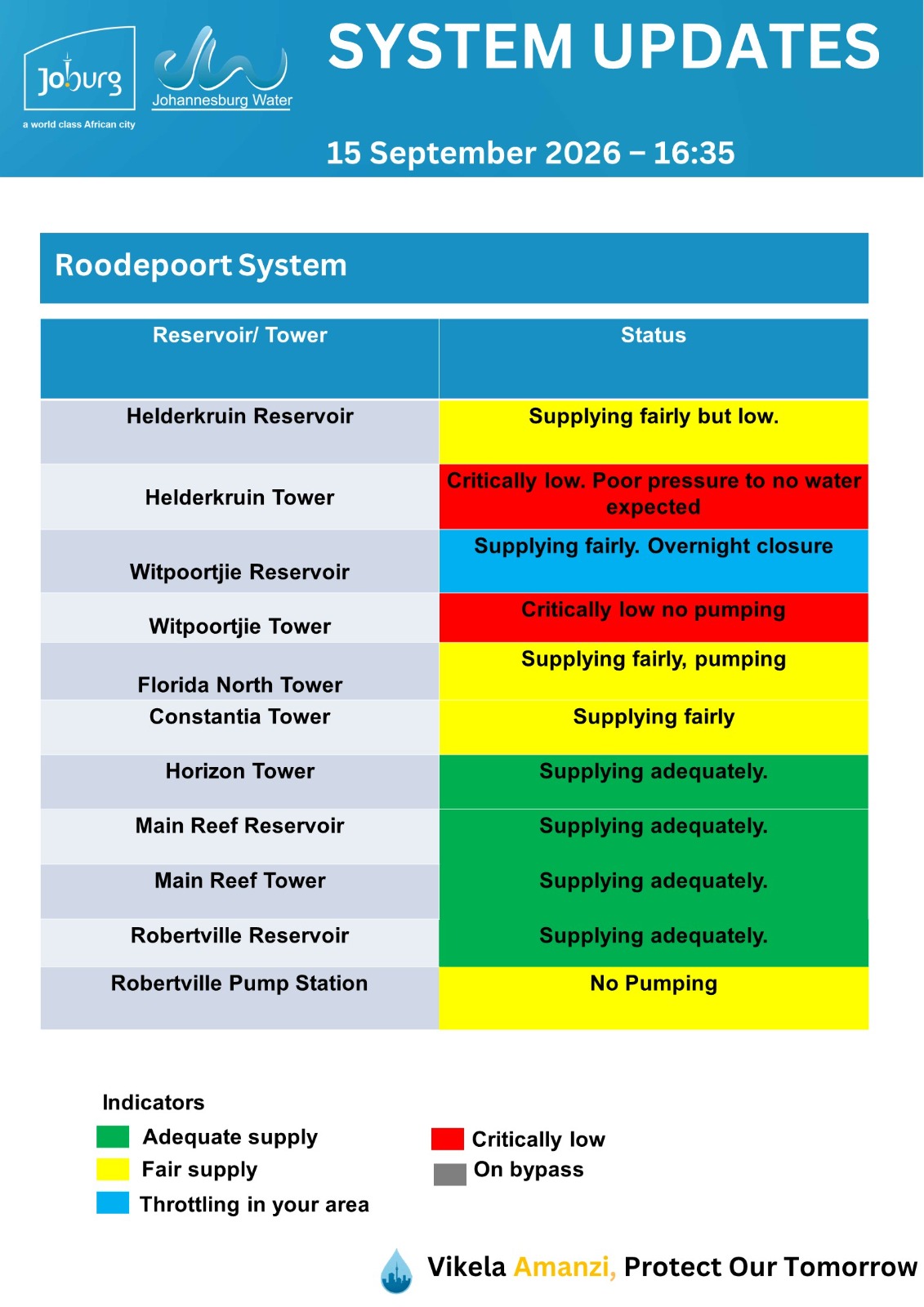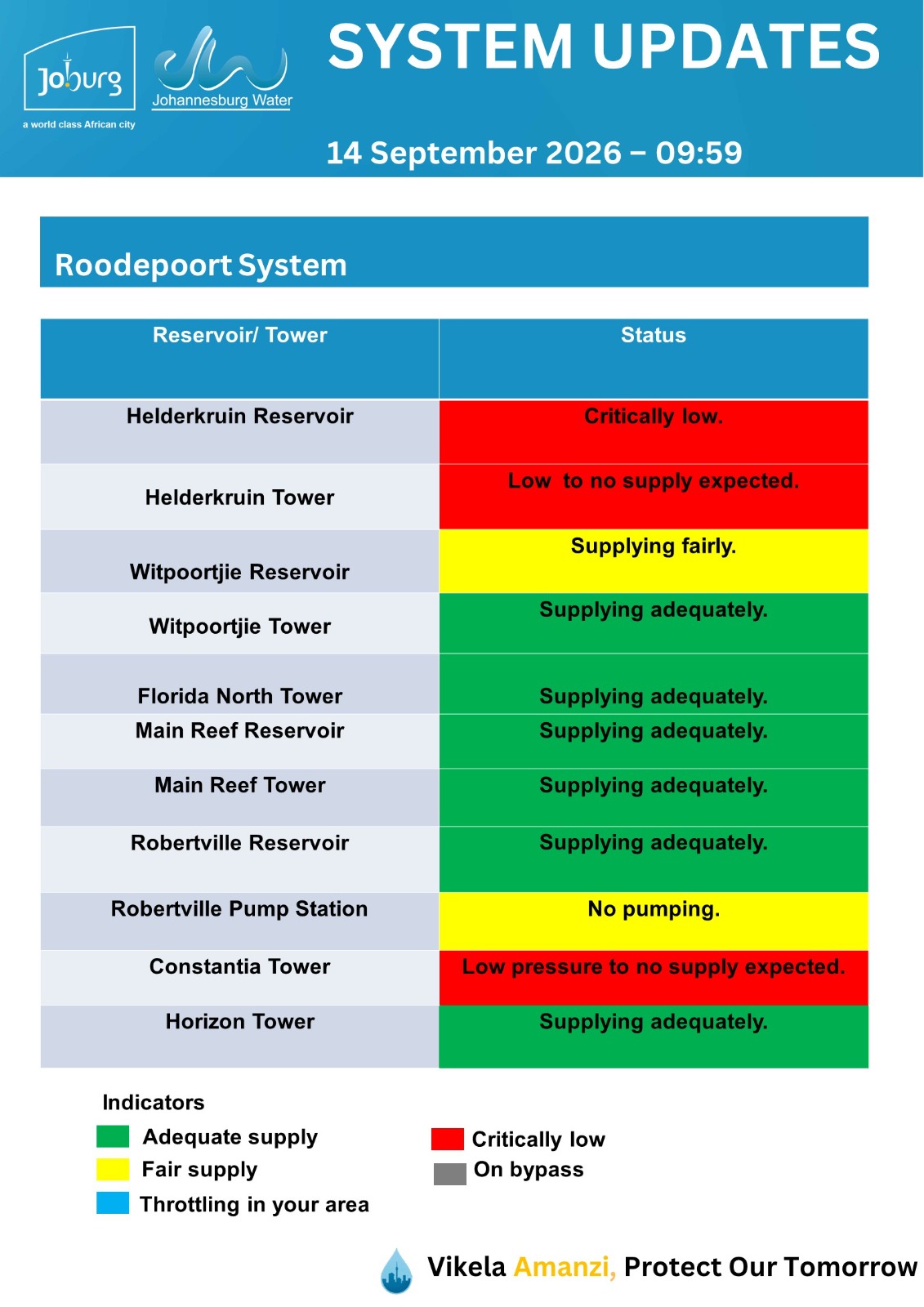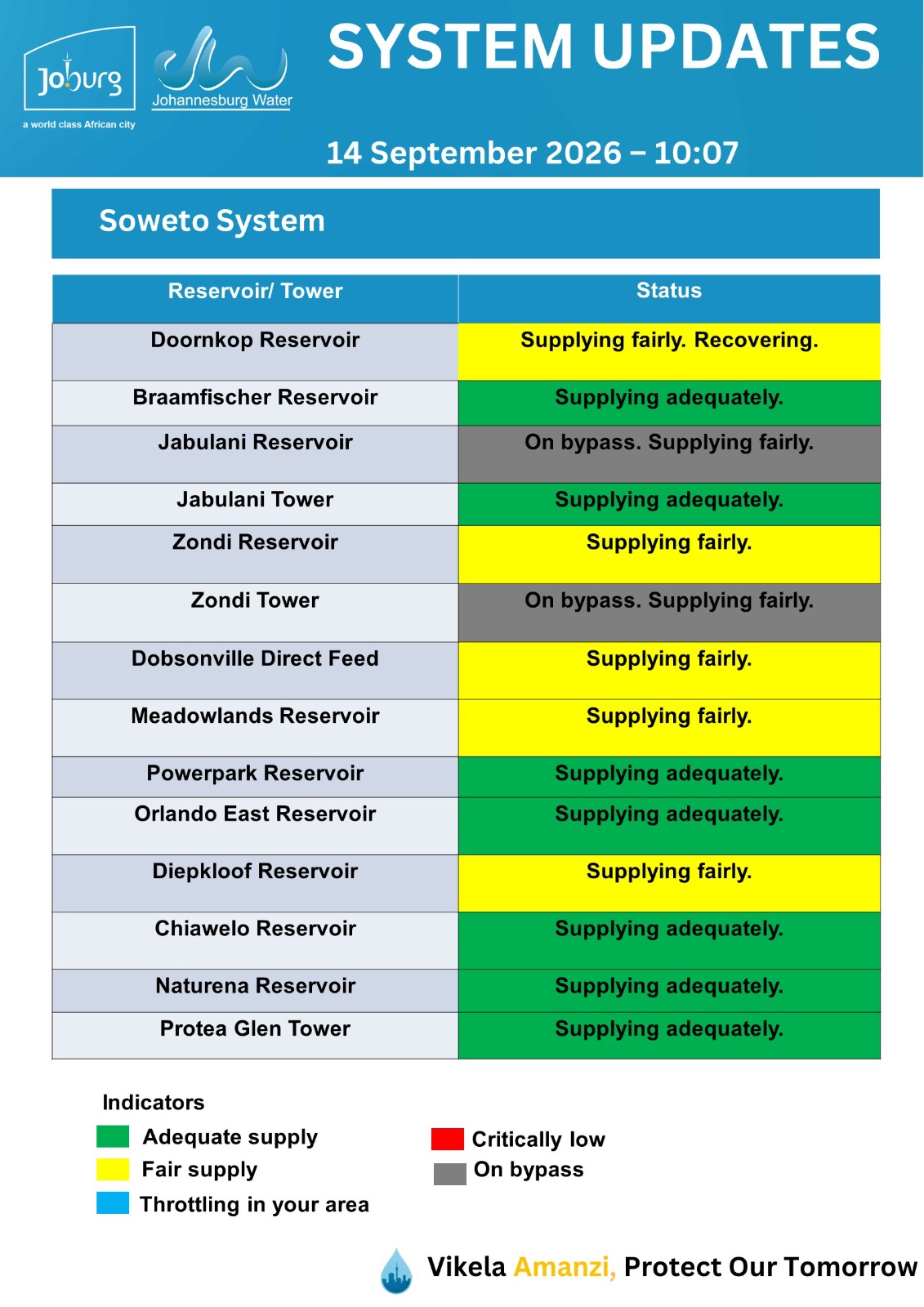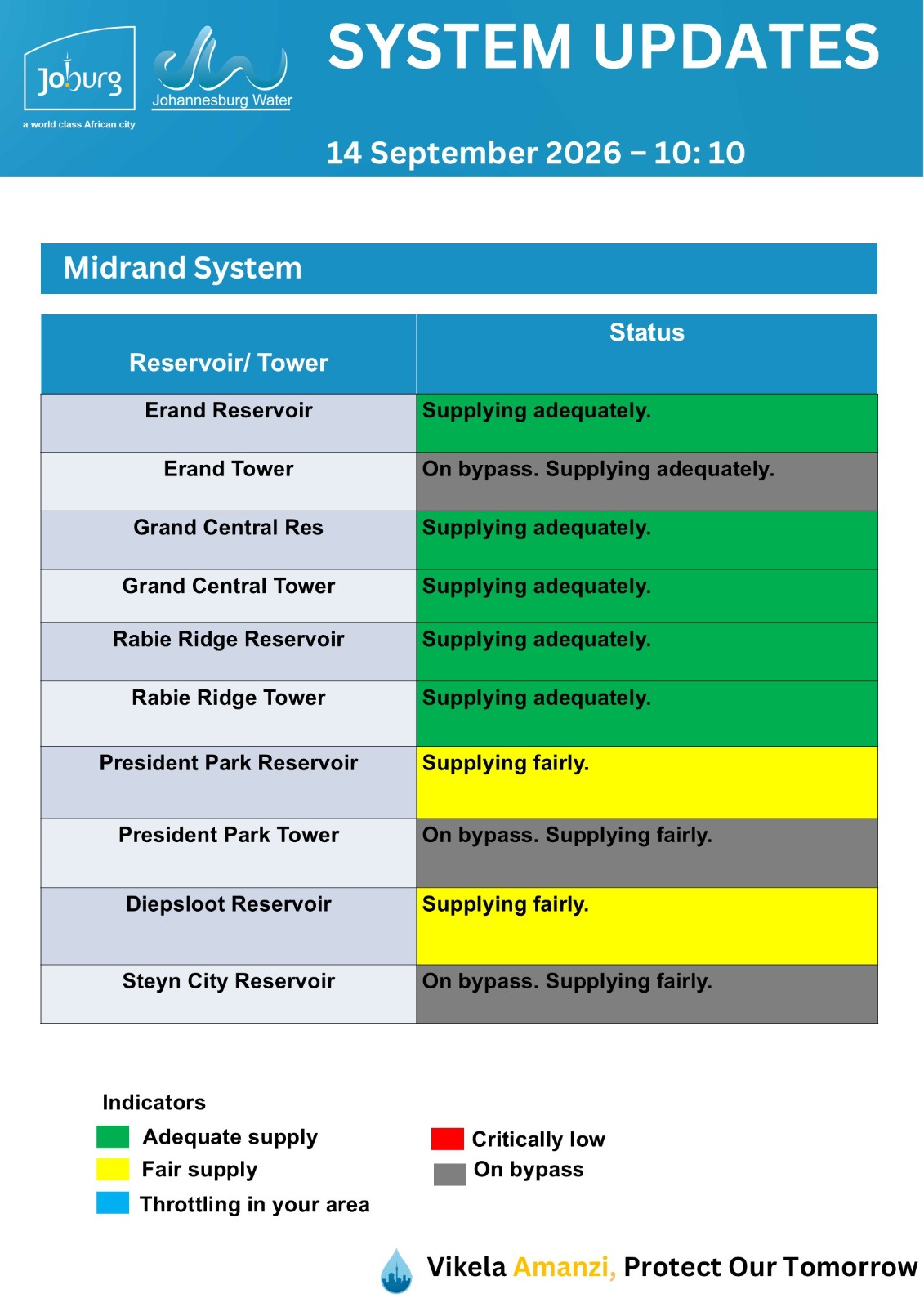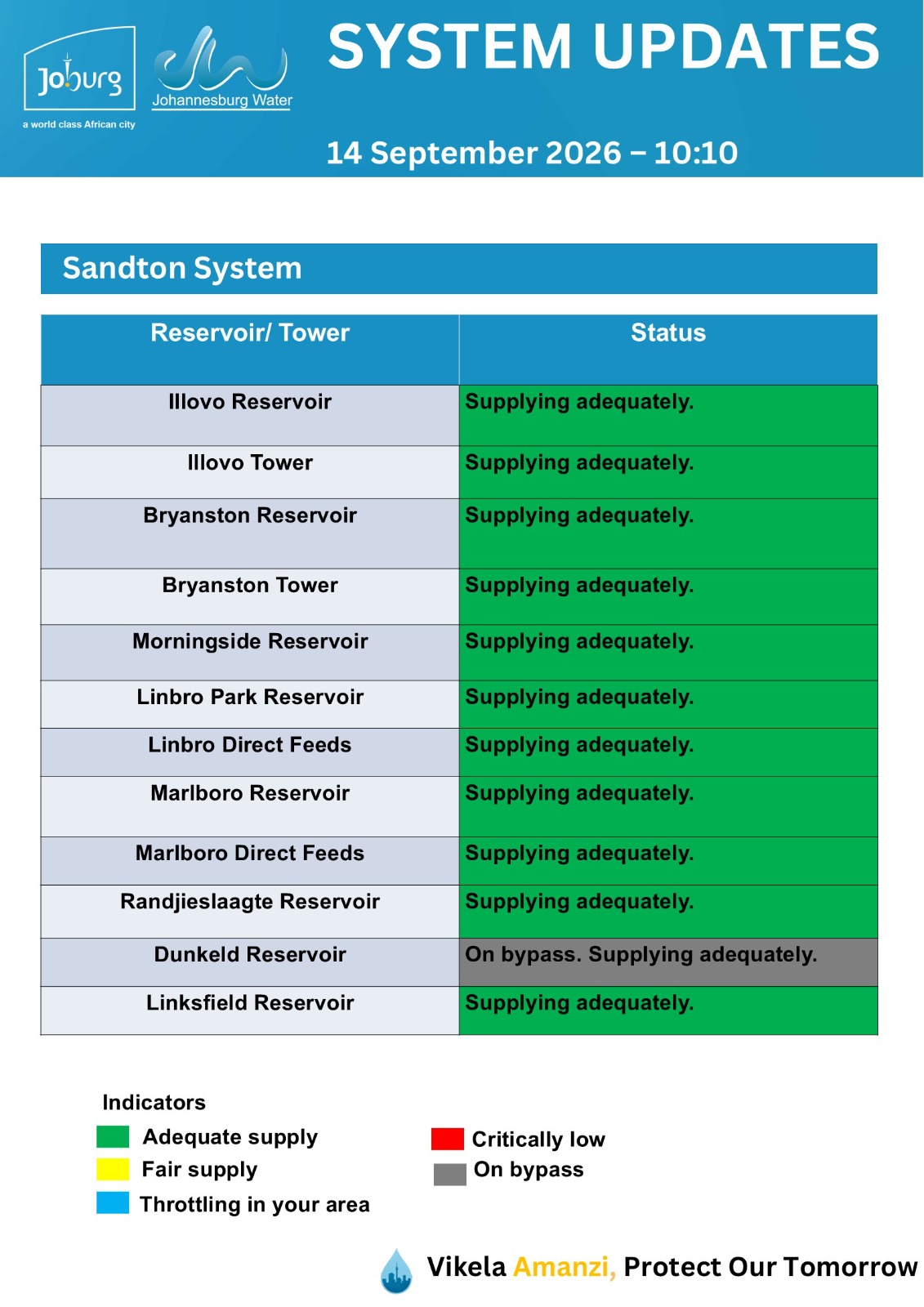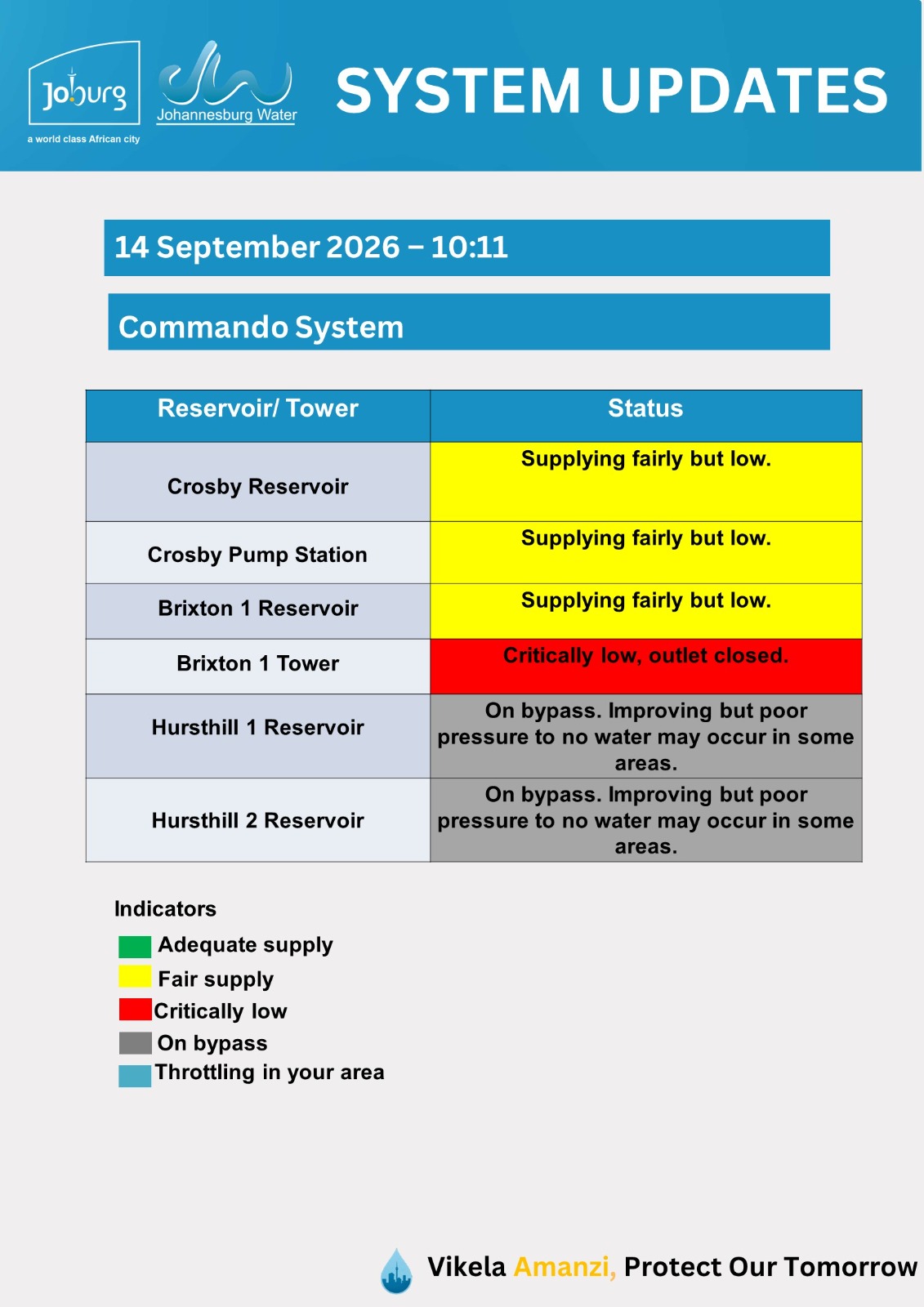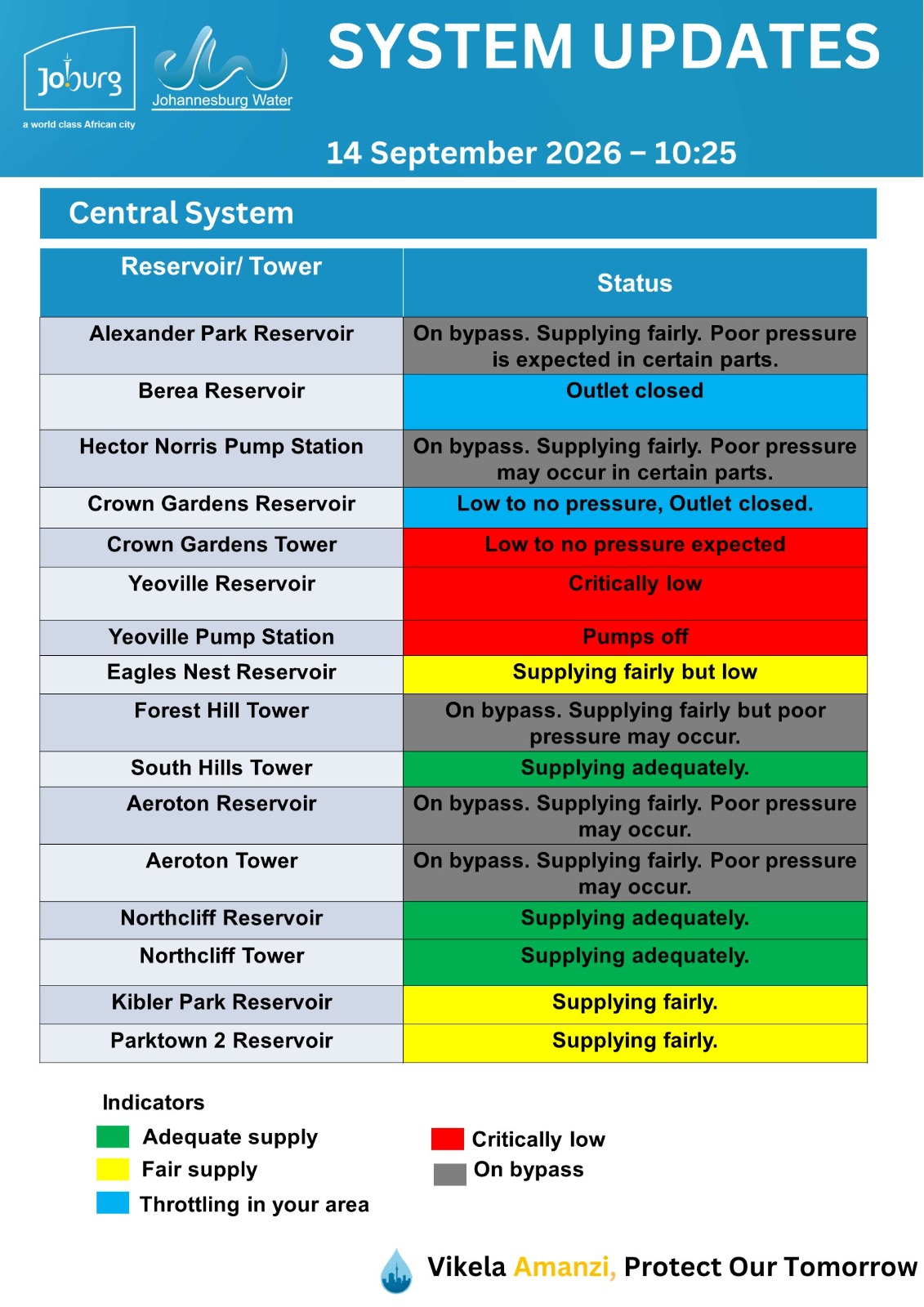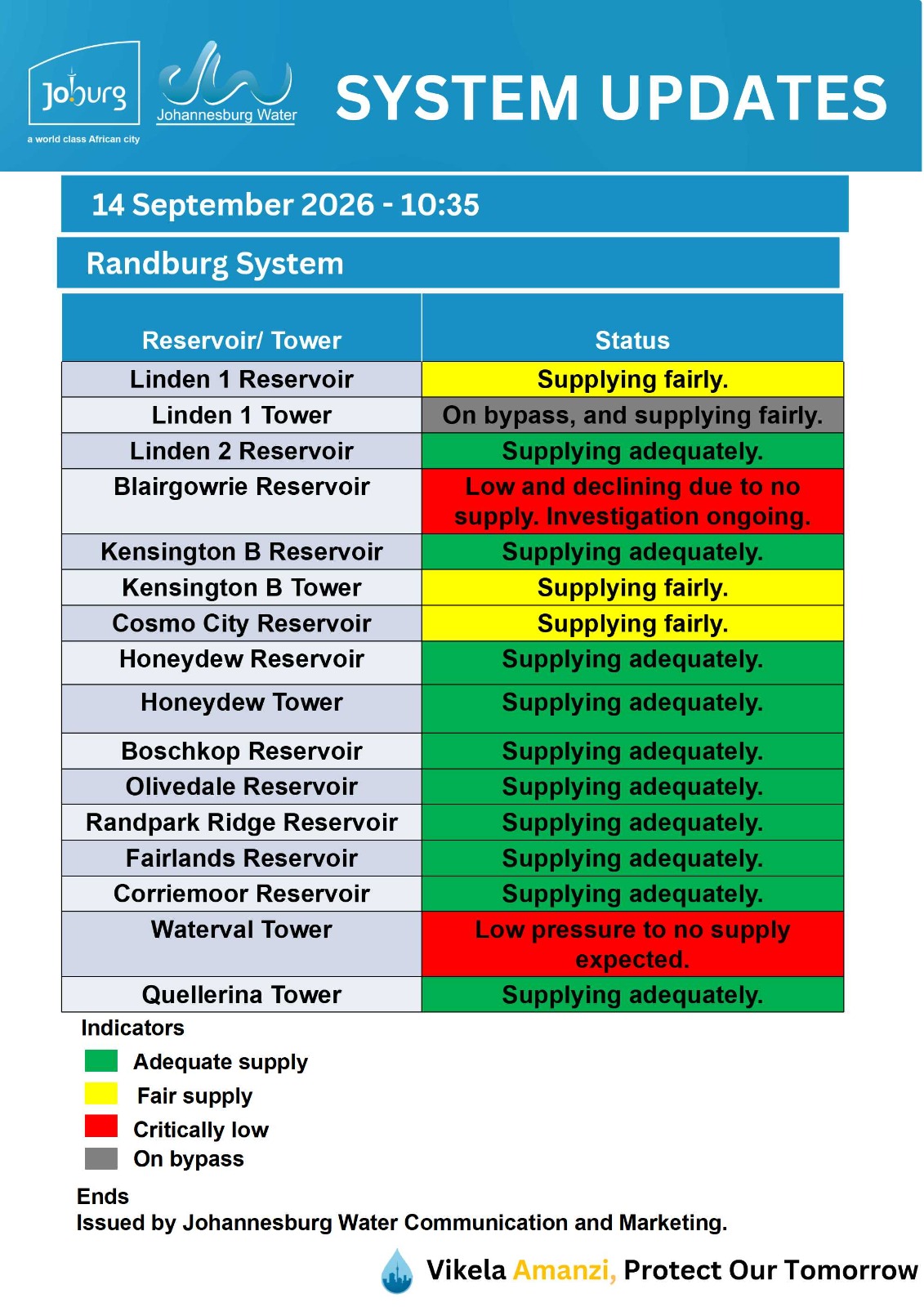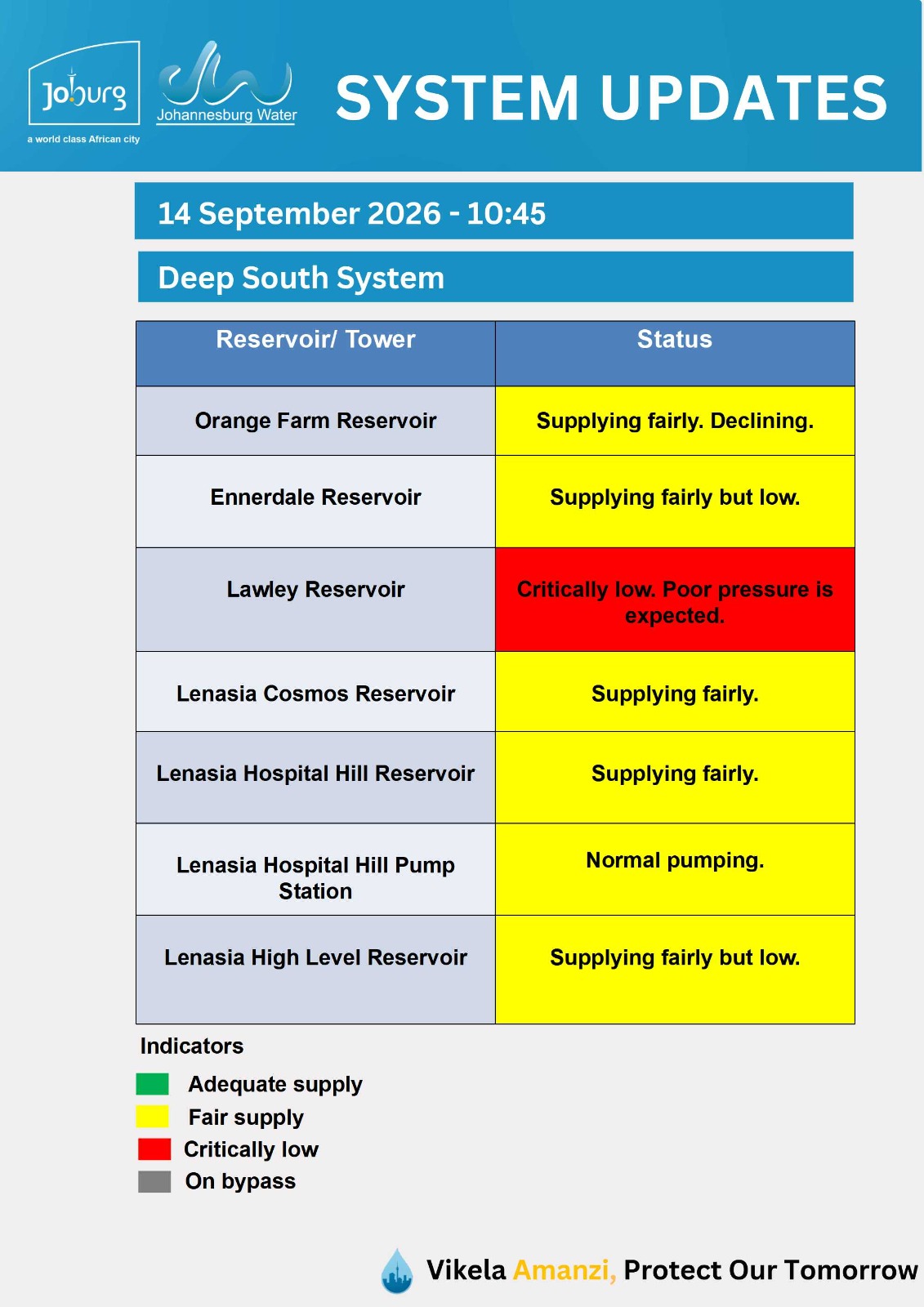
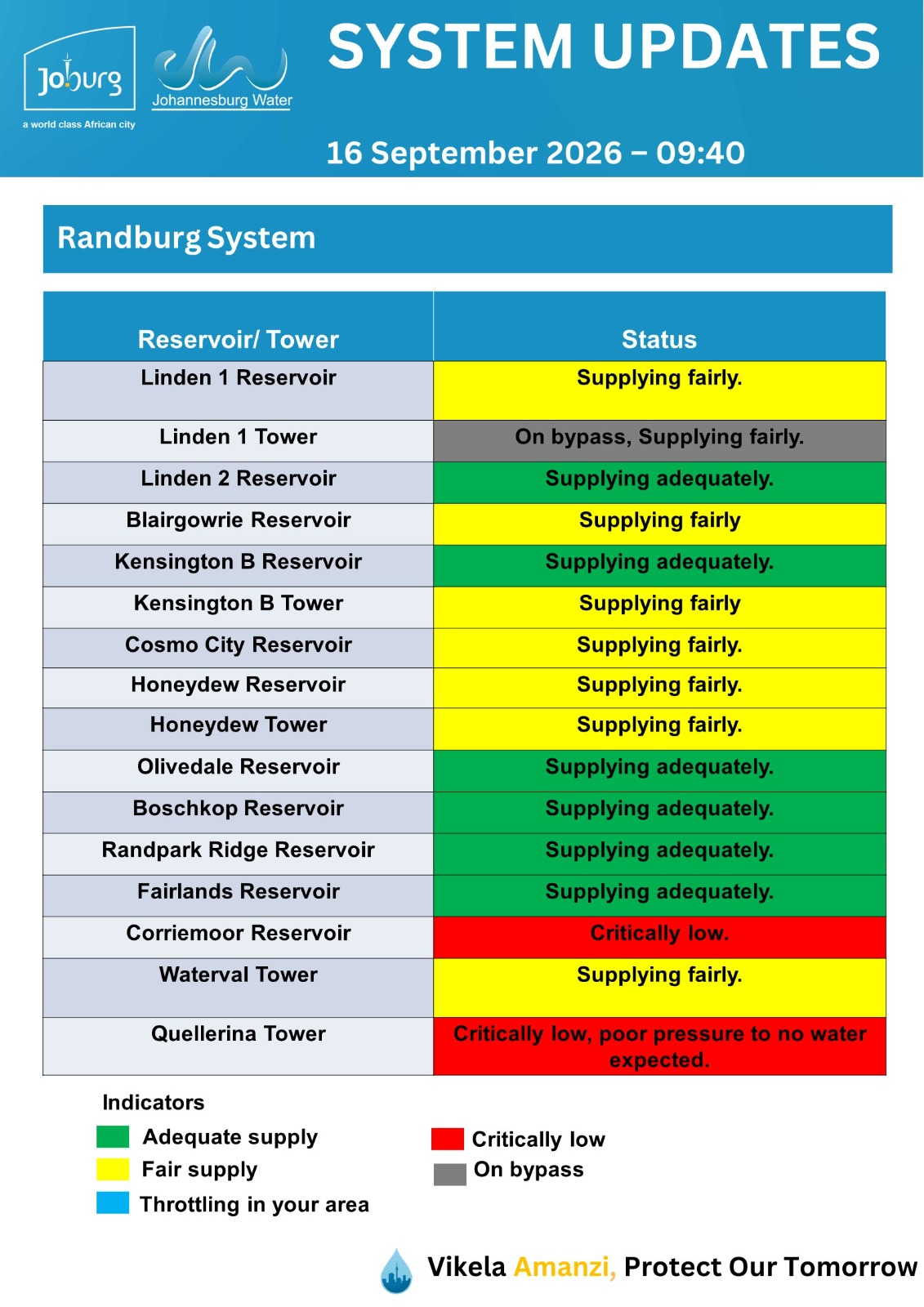
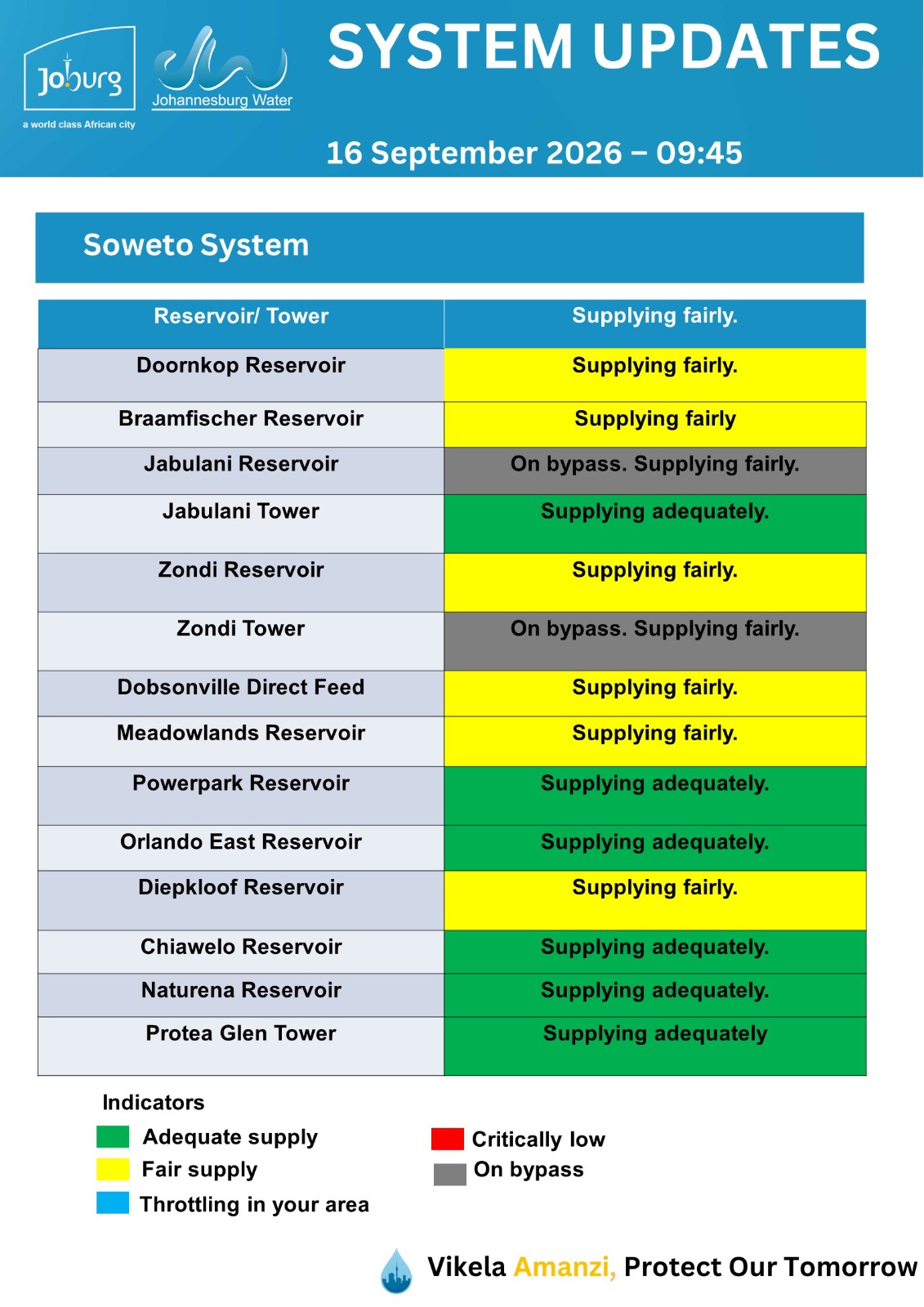
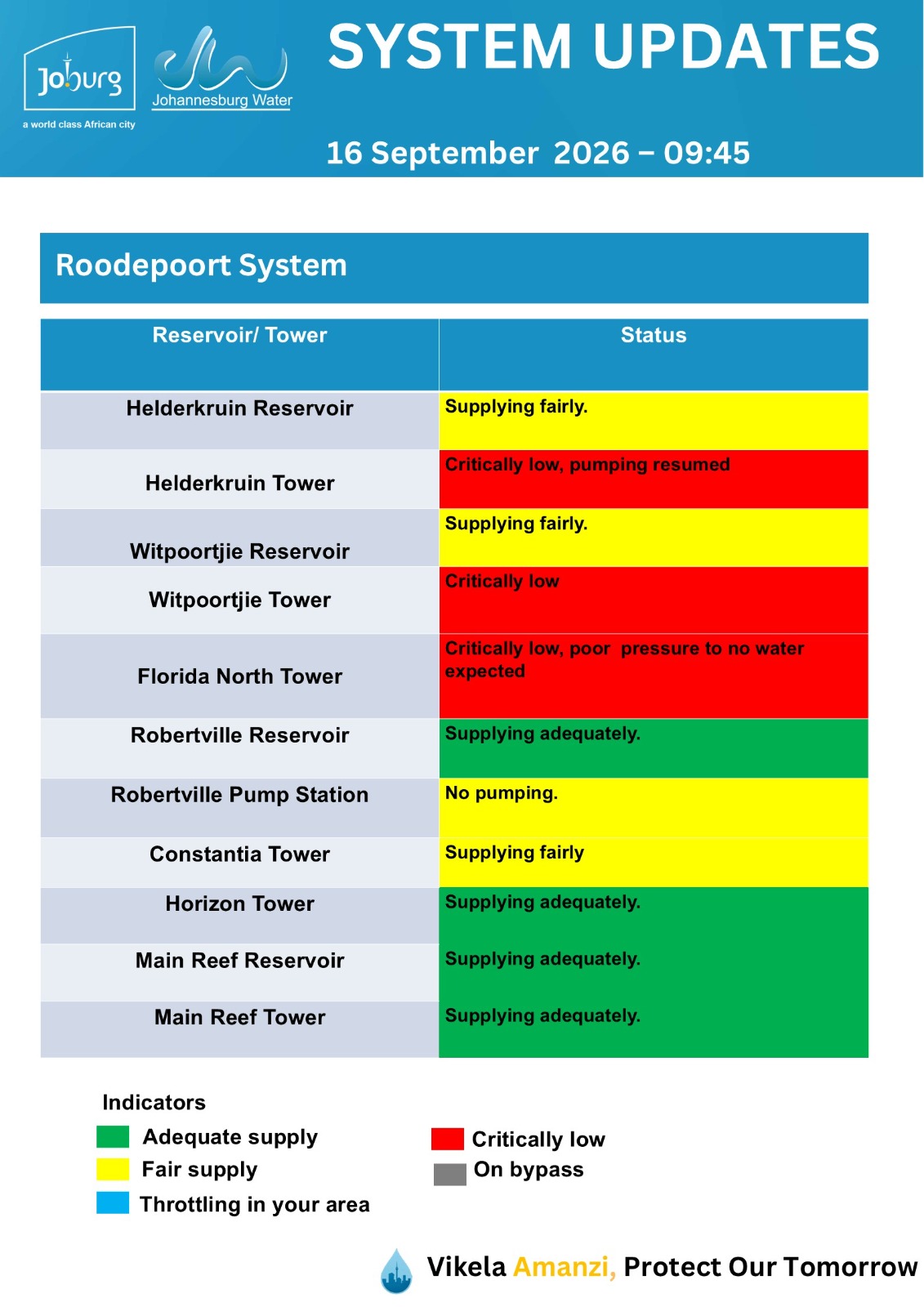
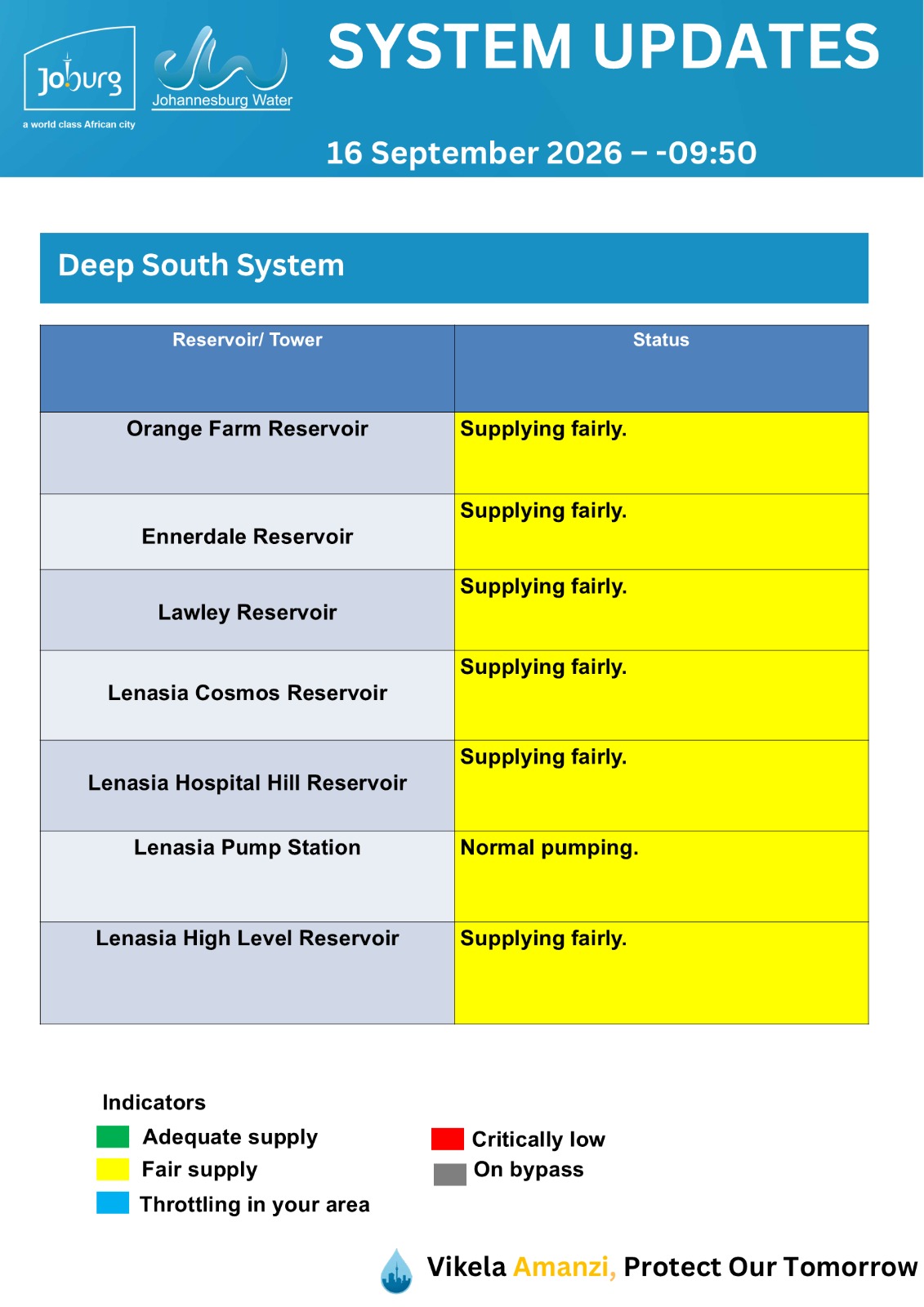
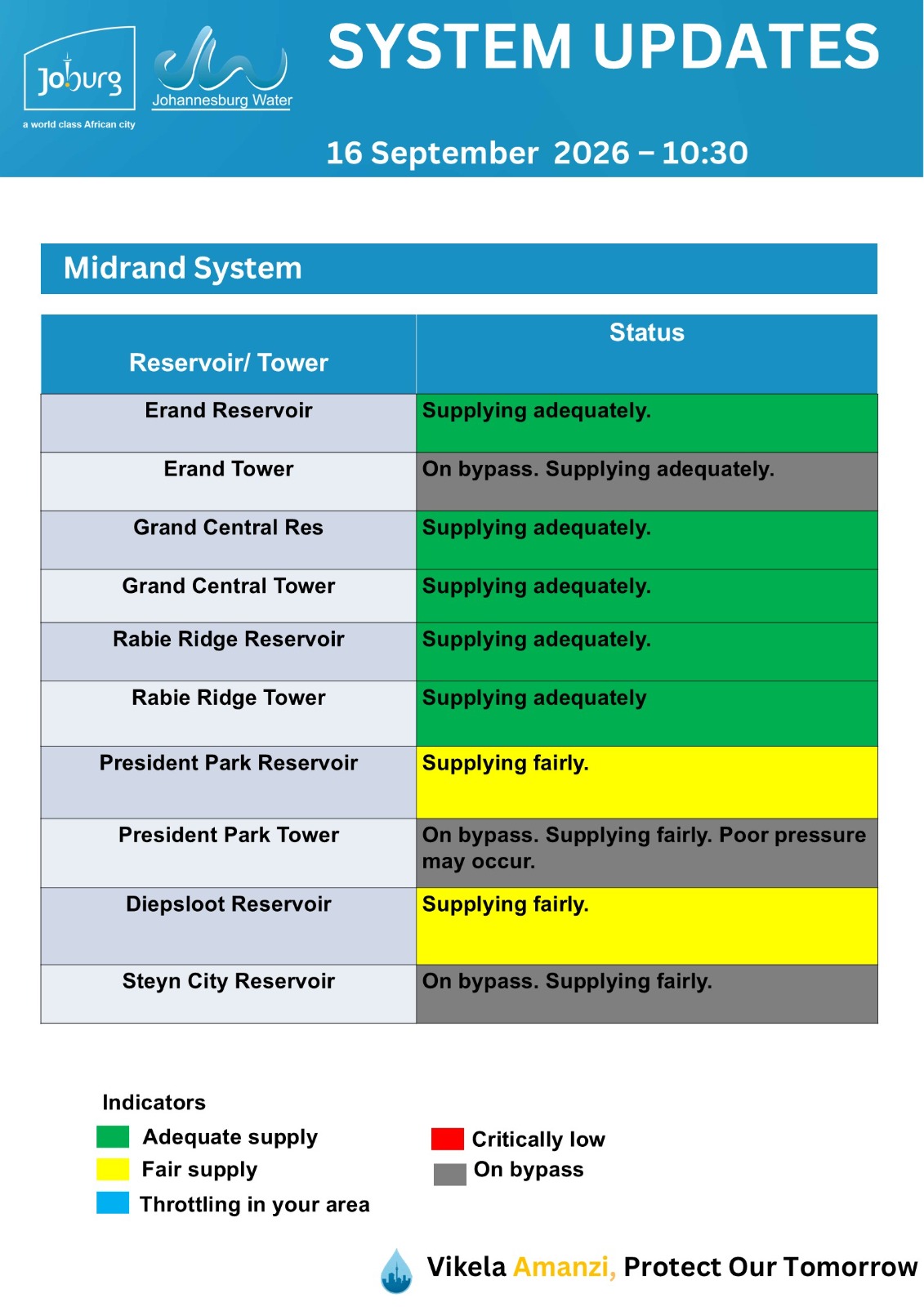
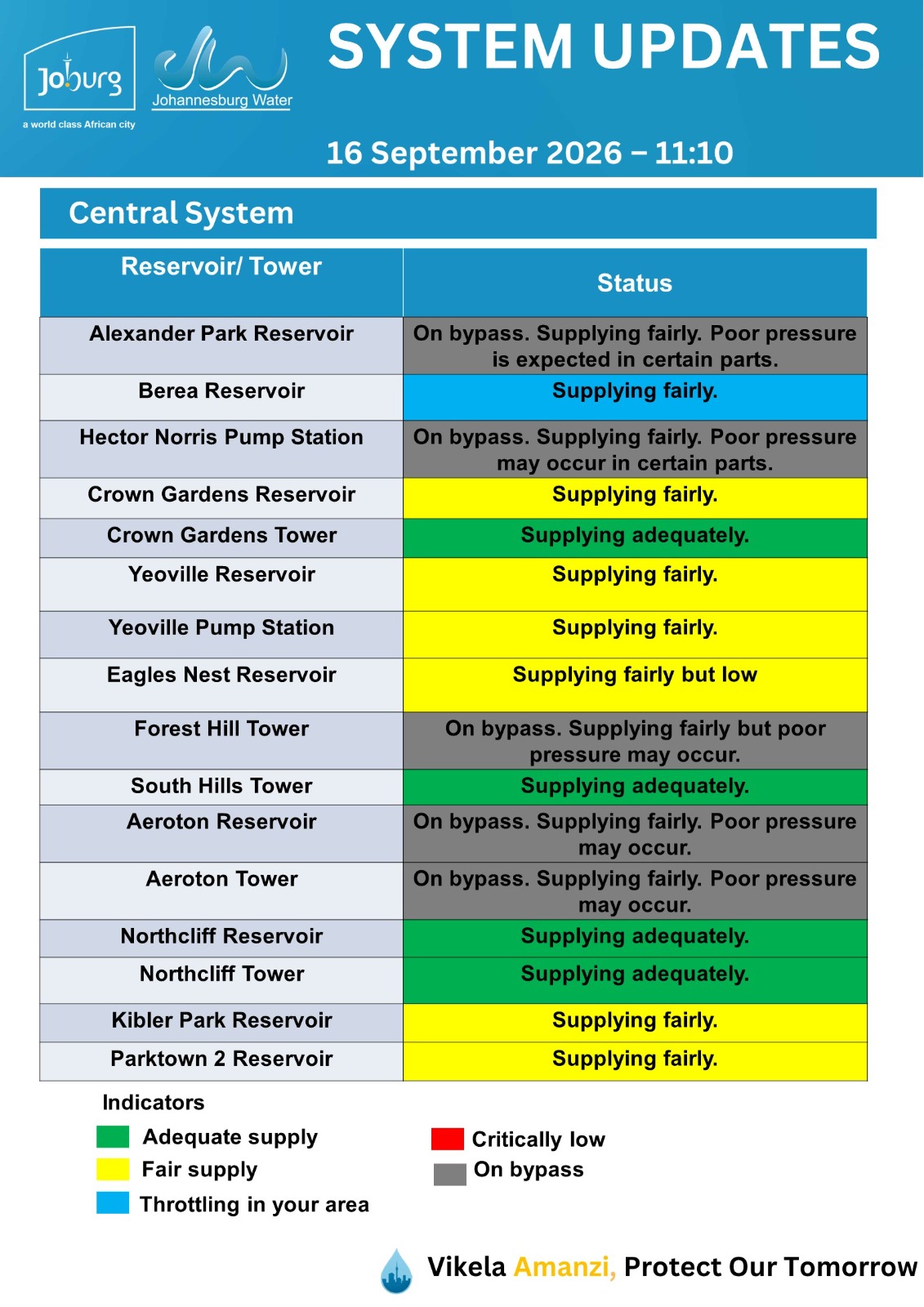
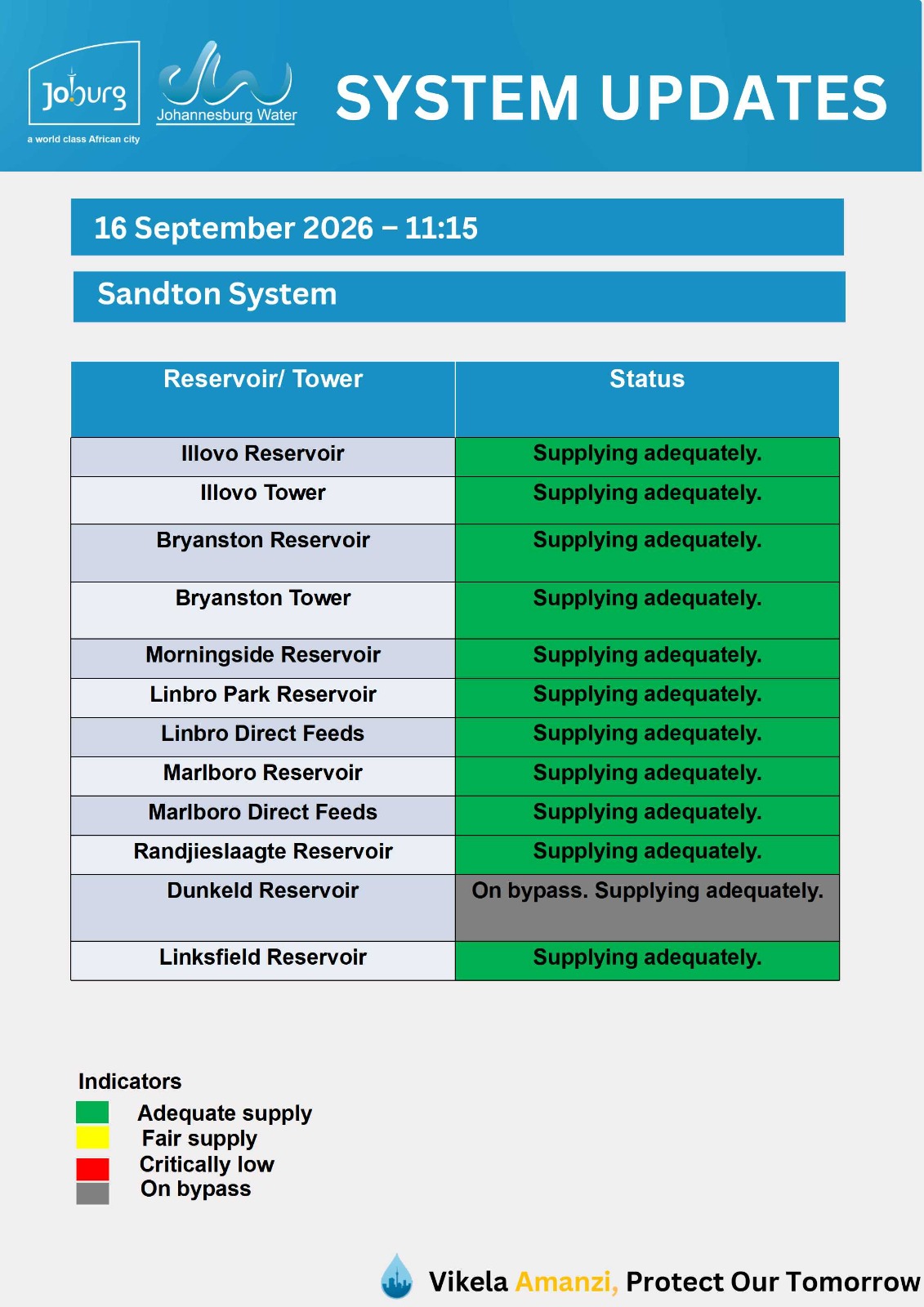
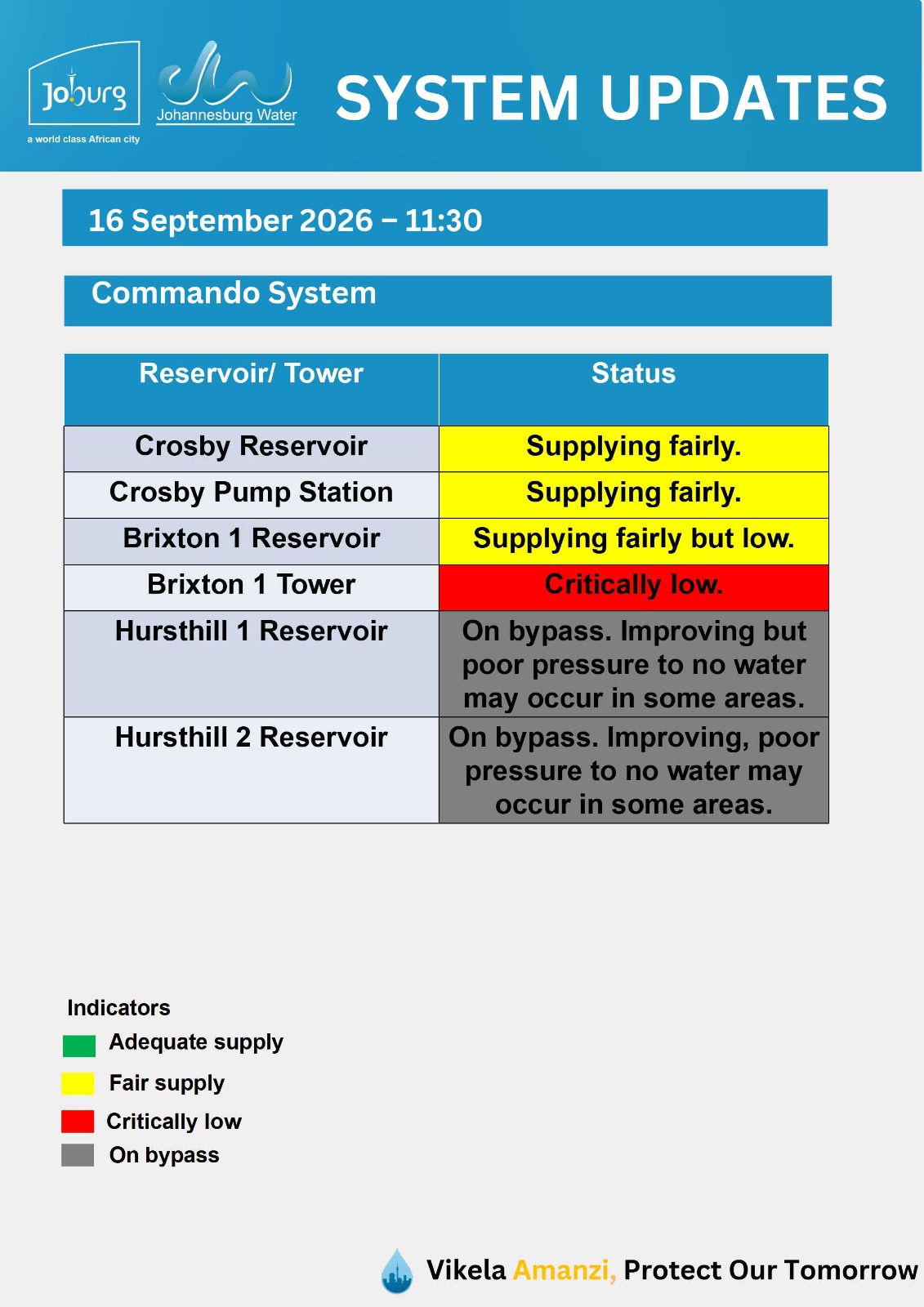
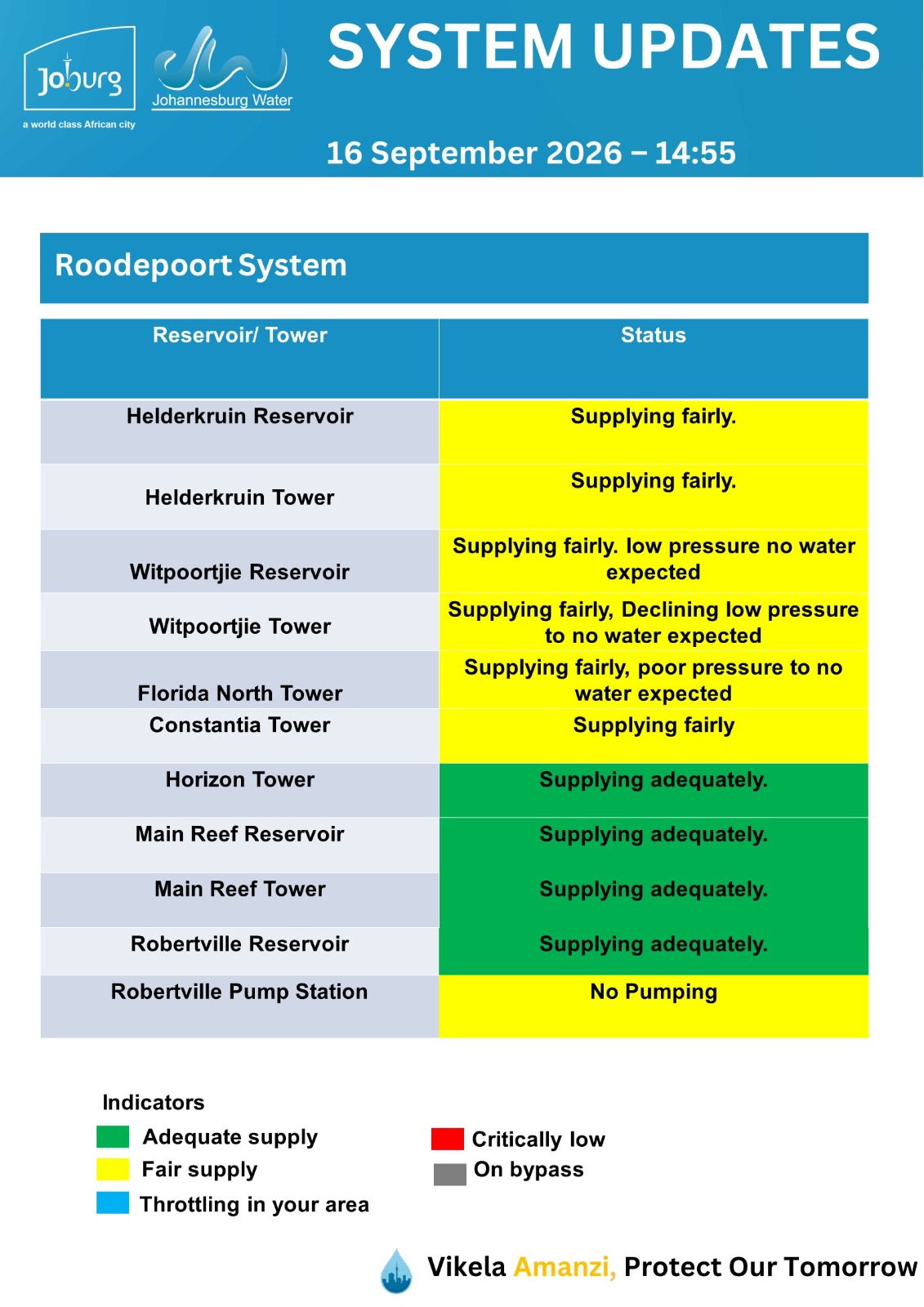
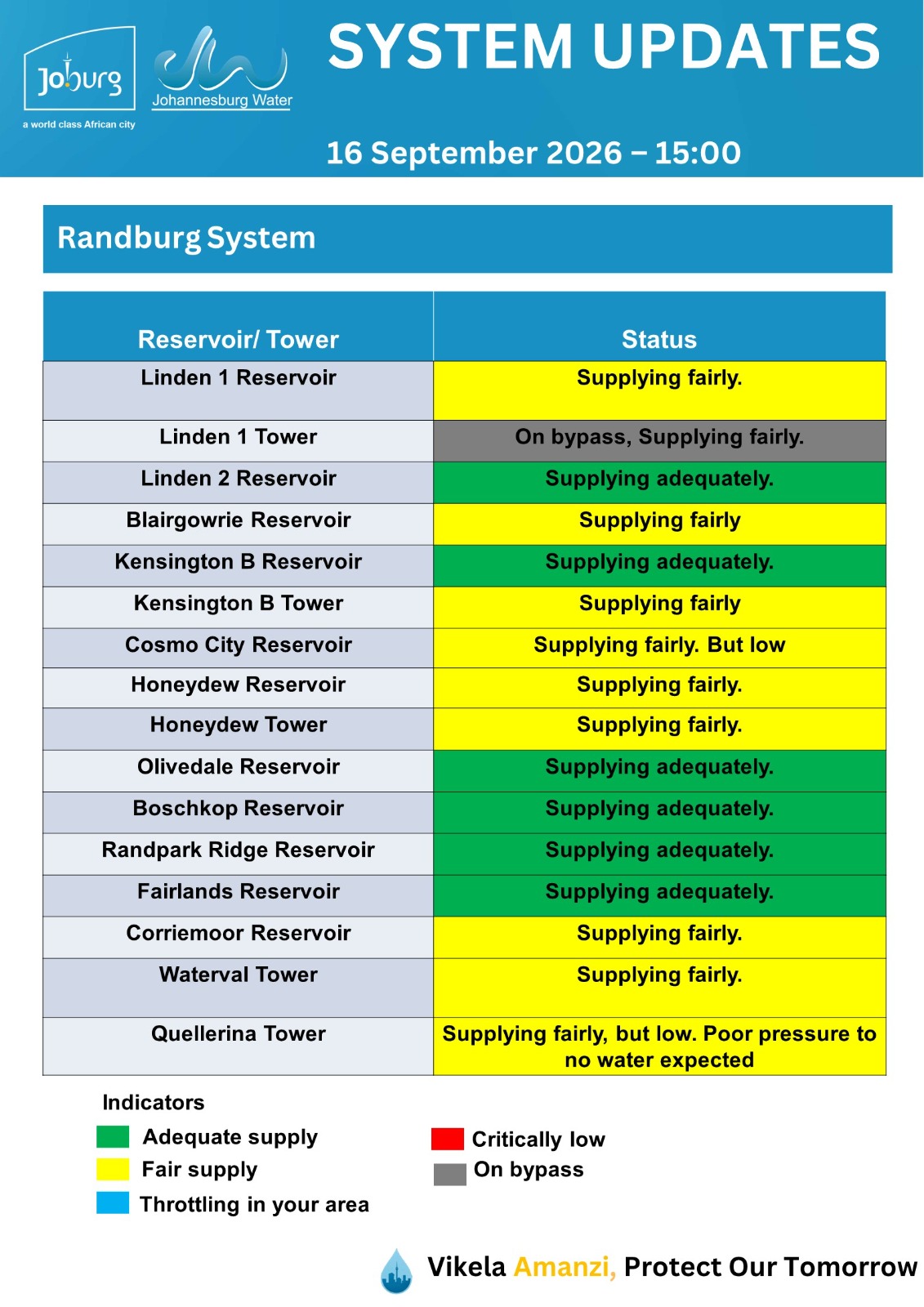
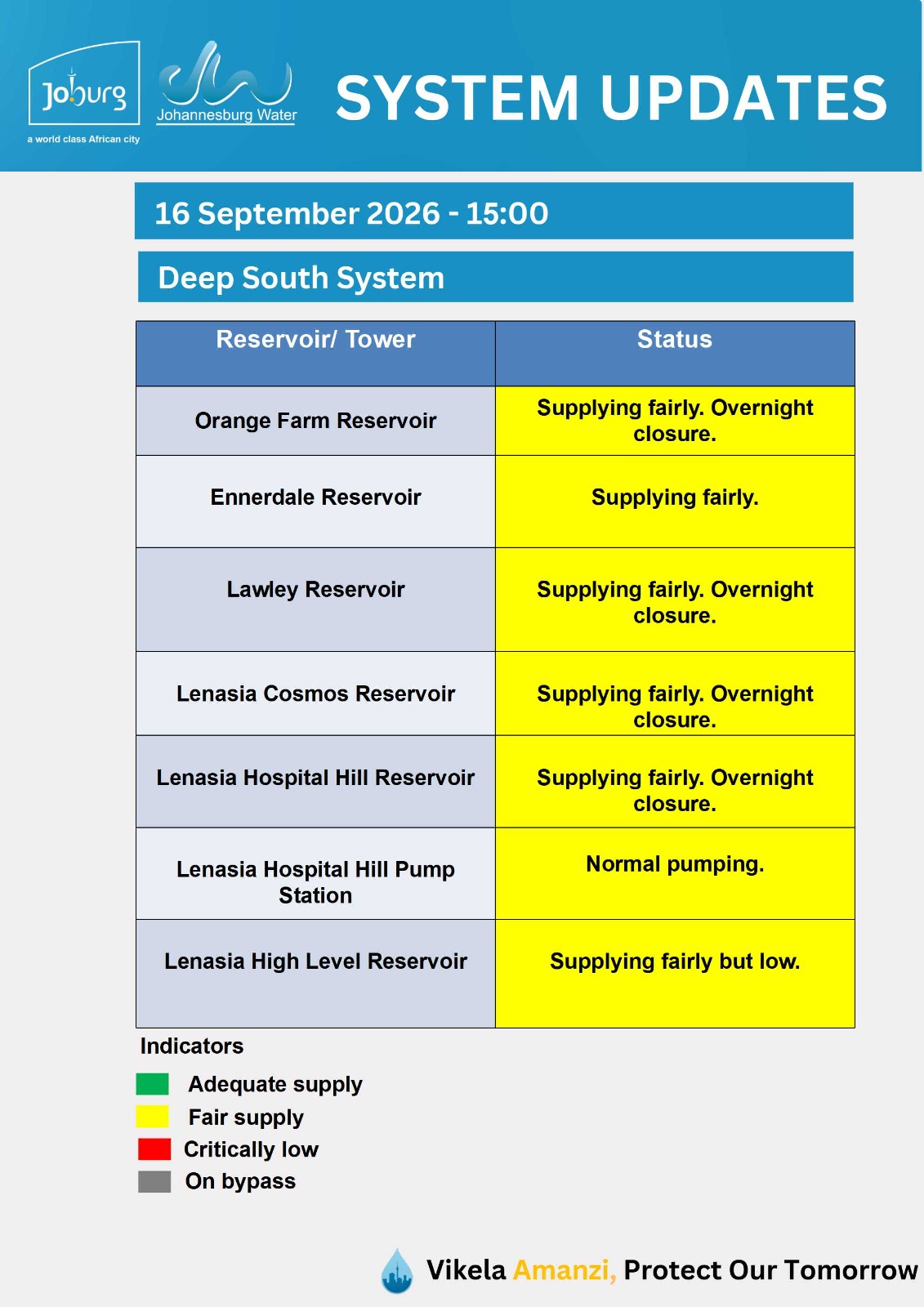
System Updates 16 September 2026
System Updates September 2026
Morning
Afternoon
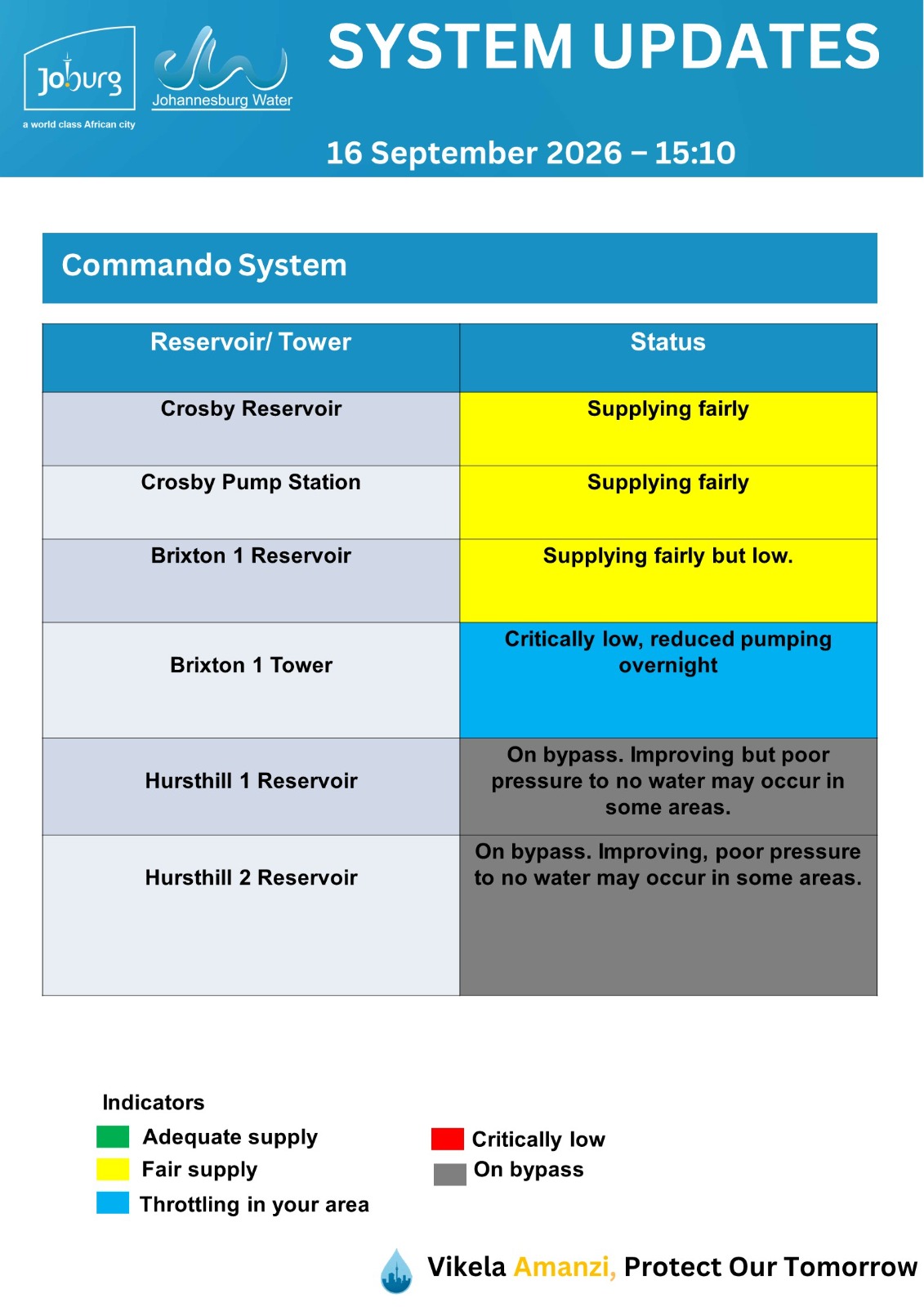
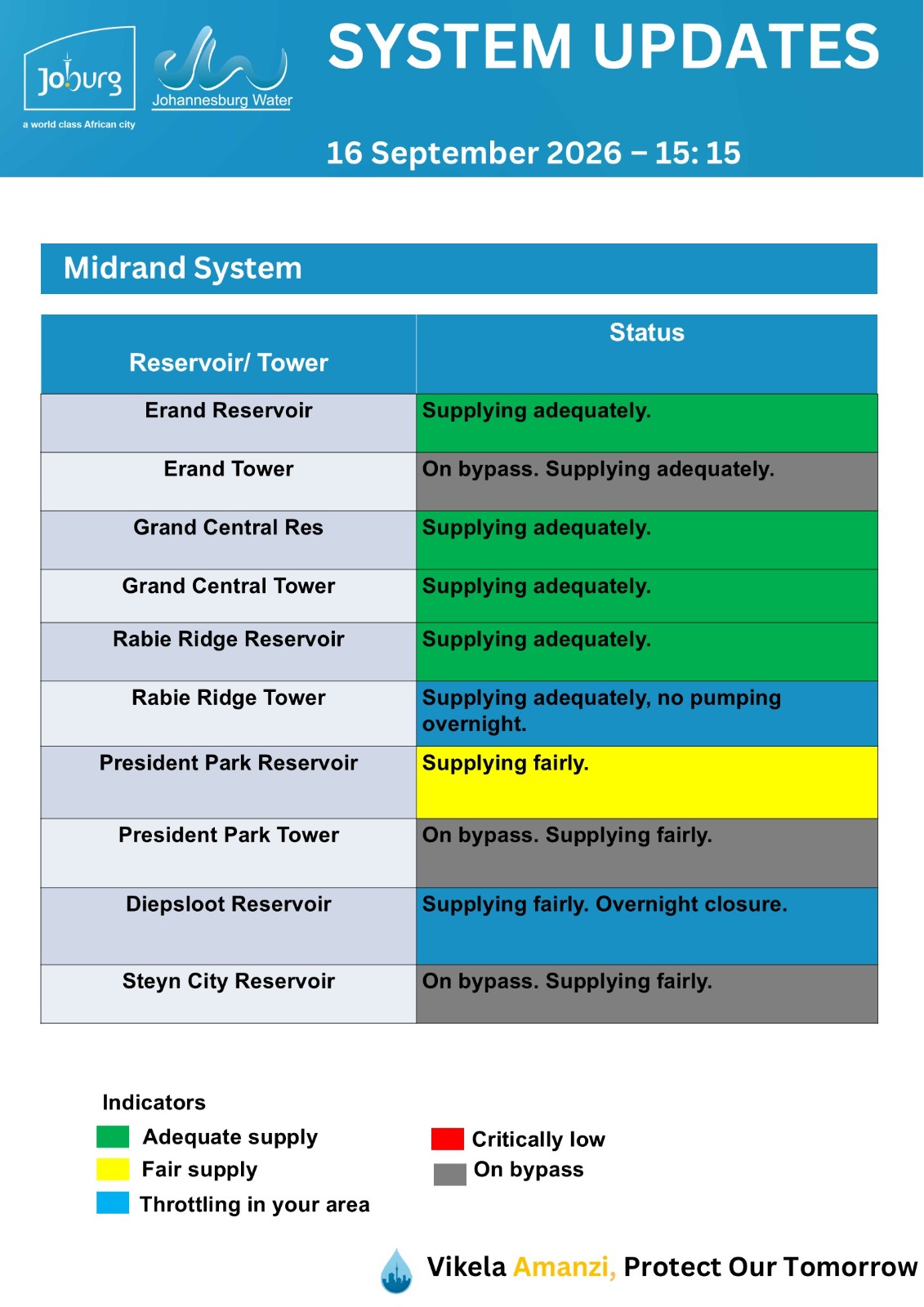
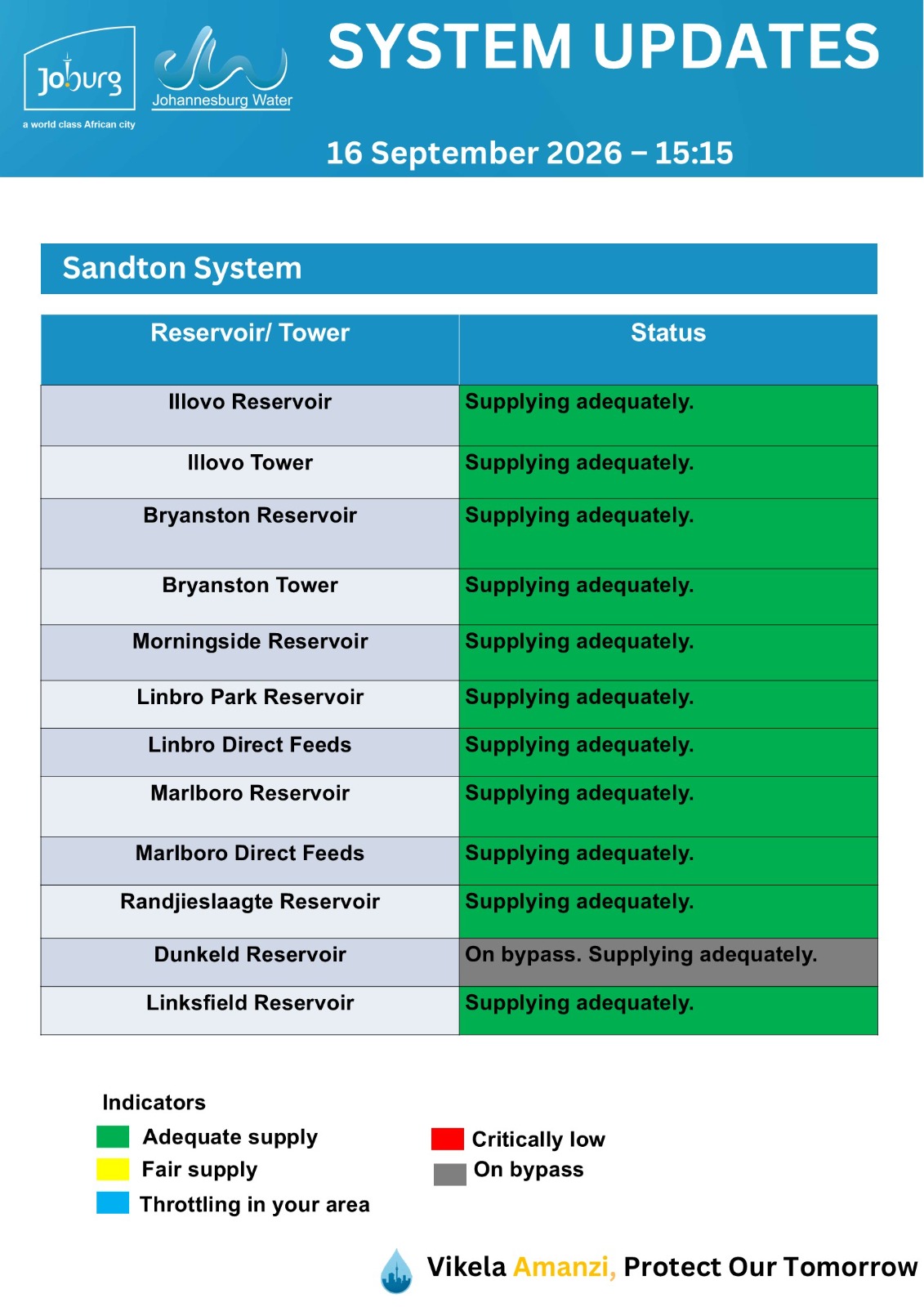
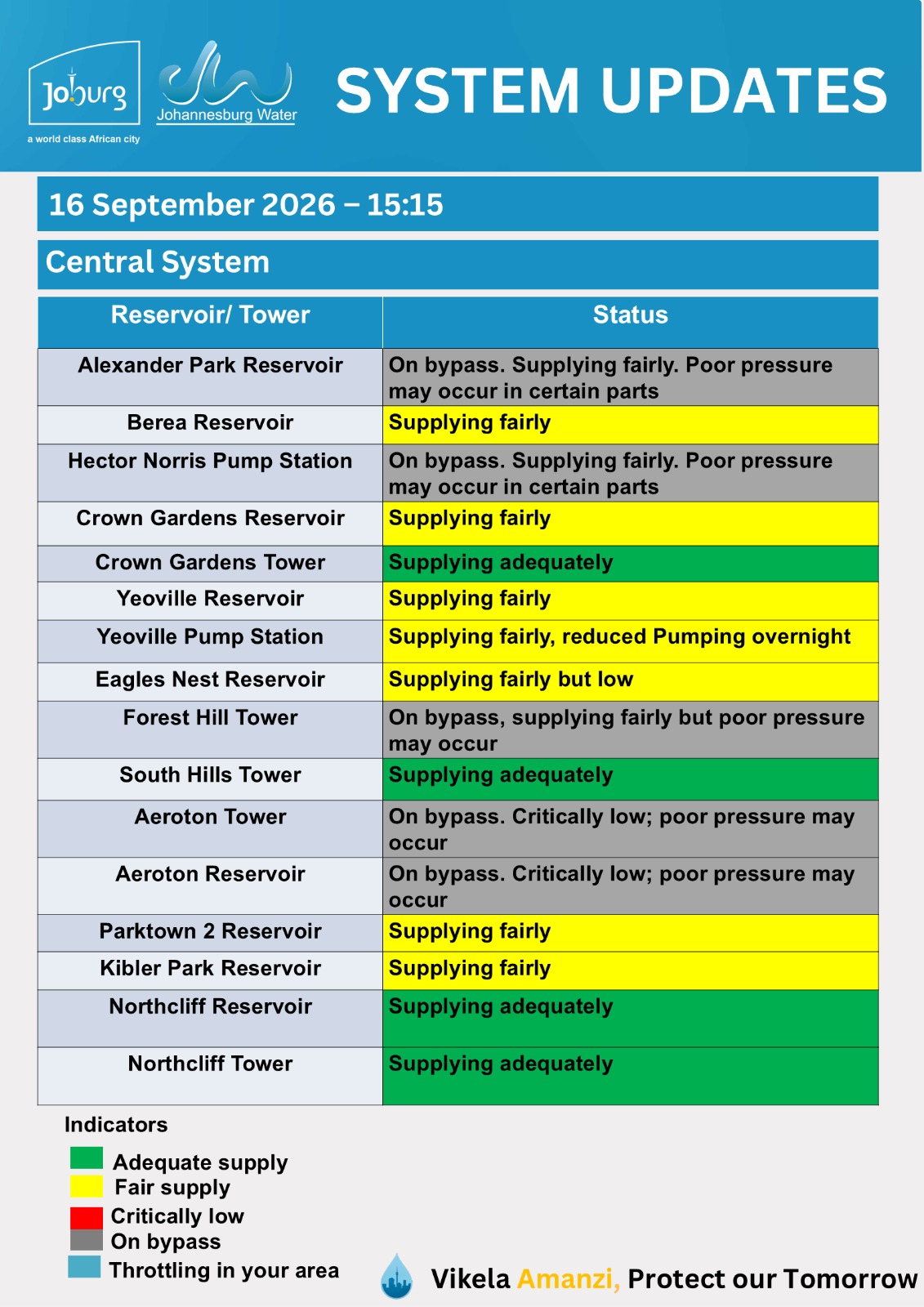
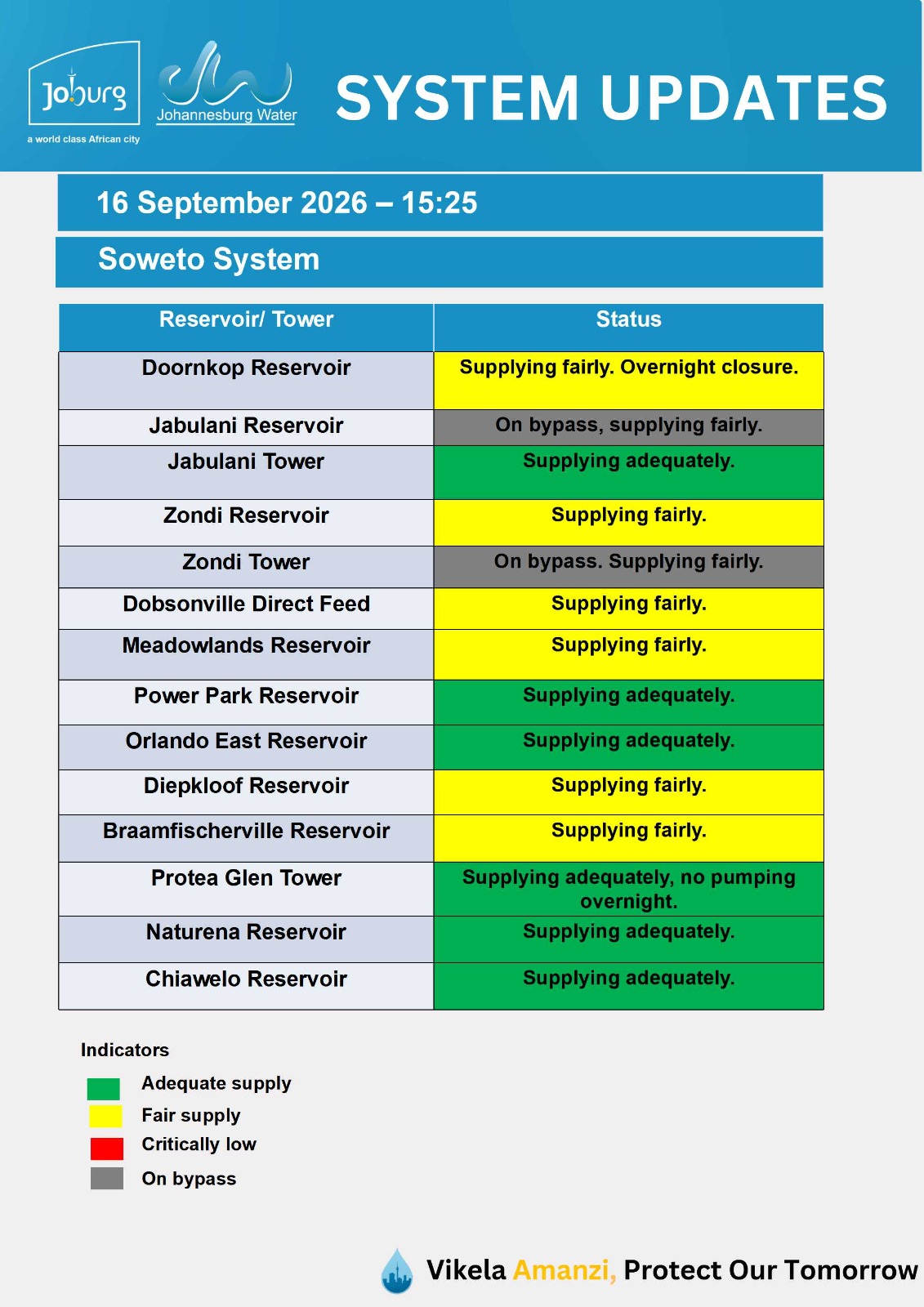
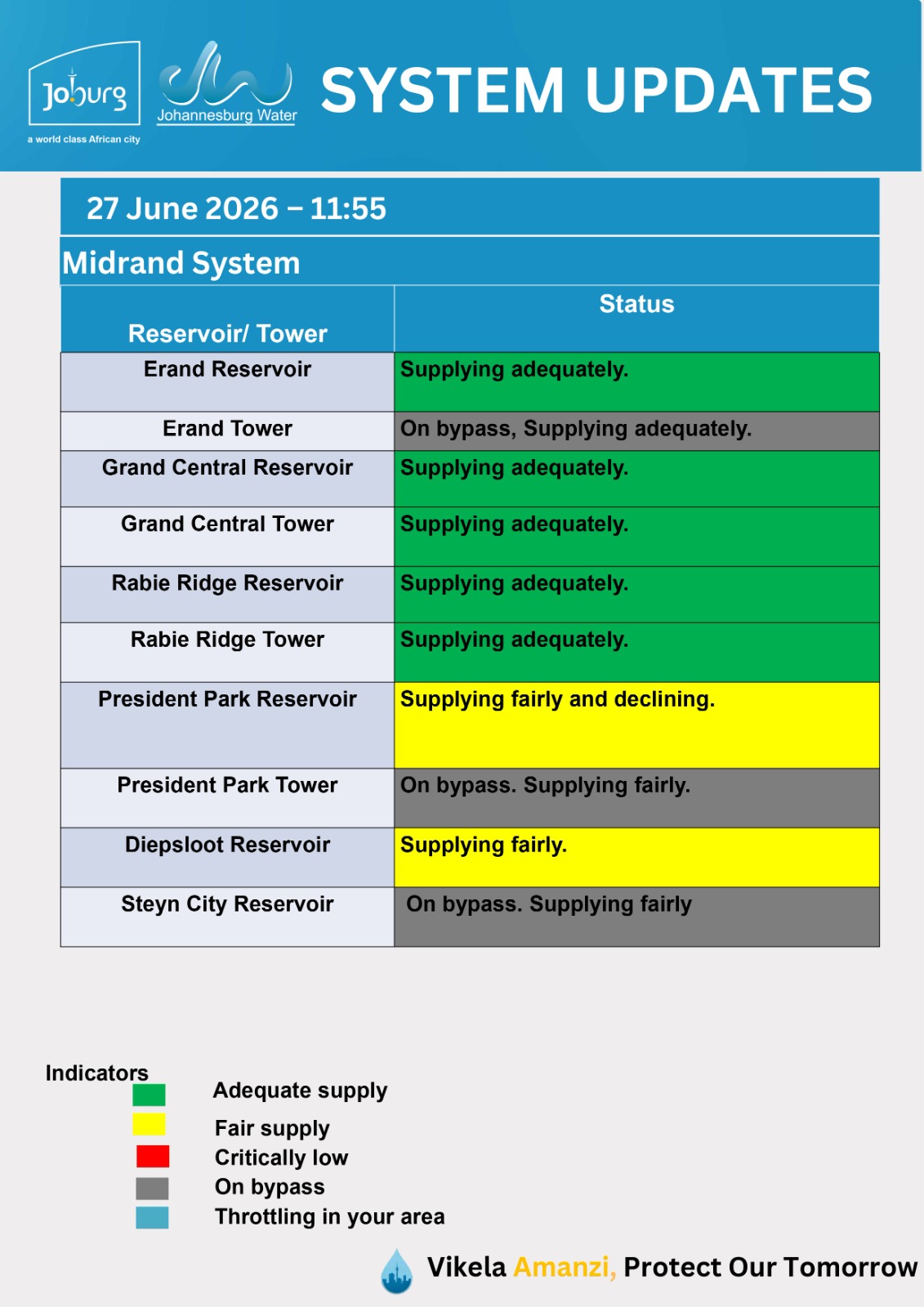


15 September 2026 – 14:30
Customer Notice
Level 1 water restrictions are here, let’s make every drop count
As temperatures rise, so does water demand. That’s why the City of Johannesburg has
implemented Level 1 water restrictions from 1 September 2026 to 31 March 2027 to help
keep water supply systems stable during the hotter months.
Level 1 water restrictions are implemented annually to manage increased water
consumption brought on by rising temperatures.
But here’s the good news: we can all play a part. Johannesburg Water is calling on
customers, communities and workplaces – yes, even us at Johannesburg Water! – to join
the water-saving team. Every drop saved today helps protect this precious resource for
tomorrow and reduces the risk of a future water crisis.
Why does hot weather matter?
When temperatures climb, we tend to use more water – for gardens, showers, swimming
pools, washing cars and more. This increased demand has a ripple effect on Johannesburg
Water’s reservoirs and towers, which can deplete available water supplies much faster.
So, the challenge is simple: use only what you need! Under Level 1 water restrictions:
Watering of gardens and filling of swimming pools is prohibited between 06:00 and
18:00 from 1 September to 31 March.
Washing paved areas and driveways with hosepipes is not permitted.
Become a water-saving champion
Small changes can make a big difference. Try these simple habits at home and at work:
Turn off the tap – a running tap can waste up to 6 litres of water every minute.
Keep showers short and opt for shallow baths.
Use a glass of water to rinse when brushing your teeth and turn off the tap while
washing your face or soaping your hands instead of leaving the tap running.
Wash your car on the grass using grey water. You’ll clean your car while watering your
lawn at the same time.
Reuse grey water where appropriate to water your garden or pot plants.
Fix those leaks – a leaking tap, toilet or pipe can waste significant amounts of water
over time.
What water-saving habit will you adopt today?
Whether it’s a shorter shower, fixing a leaking tap or reusing water around the house – every
little action adds up. Let’s work together to keep Johannesburg’s water systems resilient,
protect our precious water resources and ensure there is water for generations to come.
What Johannesburg Water is doing
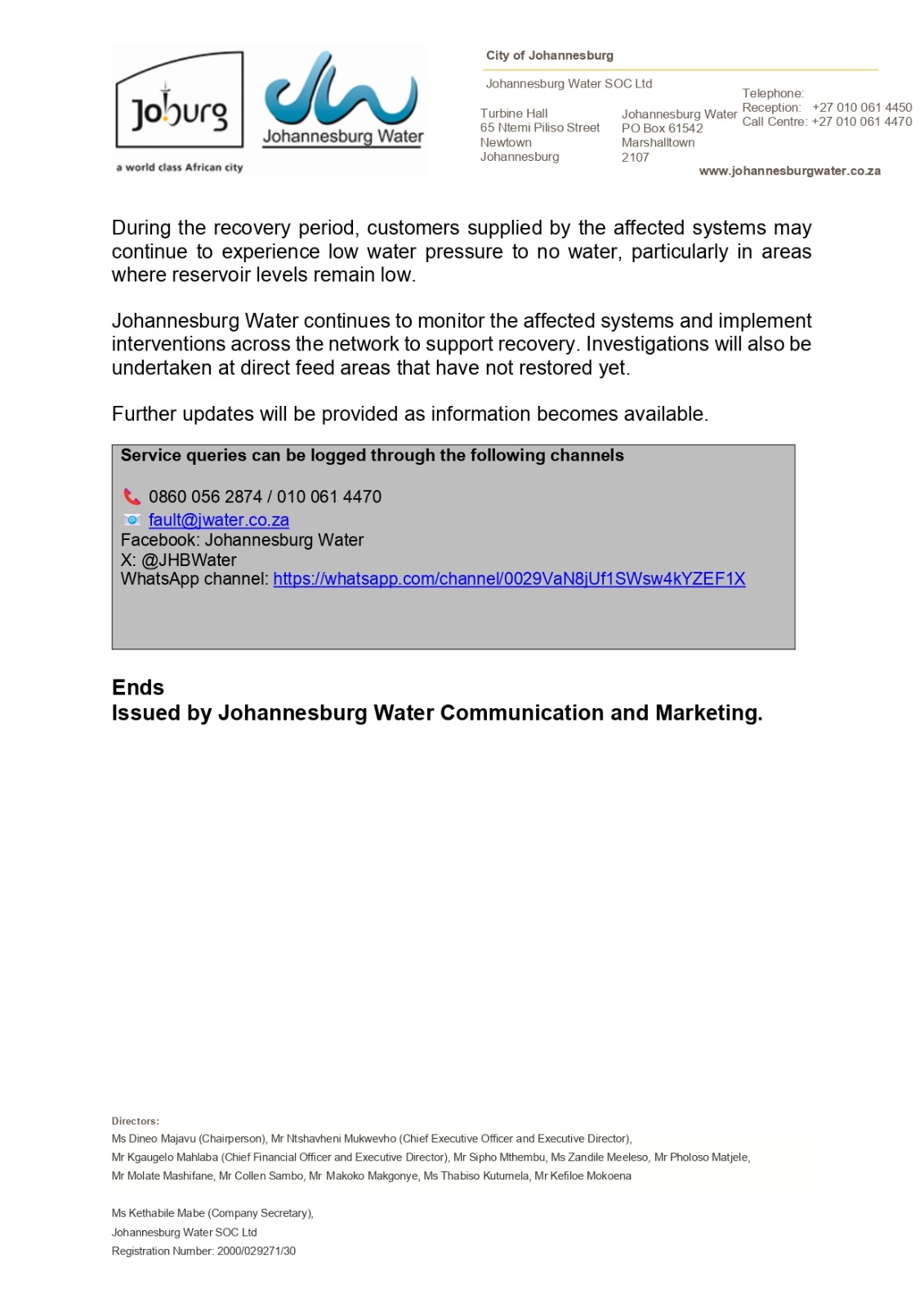
Johannesburg Water is also playing its part by monitoring reservoir and tower levels,
repairing leaks and burst pipes, managing water pressure, and implementing water-demand
management initiatives across the city. The Entity continues to maintain and strengthen
infrastructure, address illegal connections, and improve its response to reported water
losses.
Water security is a shared responsibility. While Johannesburg Water works to improve the
performance and resilience of the system, customers can support these efforts by using
water responsibly and complying with the restrictions.
Ends
Issued by Johannesburg Water Communication and Marketing.